Why Choose Cryo Storage for Global Biobanking?
Global biobanks preserve more than samples; they protect future evidence, therapies, and public health decisions. Cryo storage helps maintain cells, tissues, embryos, microbial cultures, and genomic materials at extremely low temperatures. Properly managed systems can slow biological activity almost completely. That stability matters when collections must travel across continents or remain useful for decades.
Cryobiologist Peter Mazur wrote, “The major cause of cell death during freezing is intracellular ice formation.” His warning remains practical. Ice crystals can rupture membranes, distort tissue structure, and reduce downstream test quality. Controlled-rate freezing, validated cryoprotectants, vapor-phase liquid nitrogen, and continuous temperature monitoring can reduce these risks. A technician may inspect alarm logs before breakfast, then verify a sample rack at −150°C. Small routines protect irreplaceable material.
For global biobanking, cryo storage also supports standardized workflows. Barcoded vials, documented chain of custody, backup power, and remote alarms improve traceability. Regional repositories can share materials without repeatedly rebuilding entire collections. However, cold storage alone is not a complete strategy. Some samples need specialized cooling profiles, and every recovery method should be validated for its intended use. That assumption deserves challenge.
Experience shows that failures often begin with ordinary details: an unlabeled vial, a delayed transfer, or an overlooked alarm. Reliable biobanking therefore combines engineering, trained personnel, quality systems, and honest review. No facility is perfect. The stronger question is whether its risks are visible, measured, and corrected. When these practices align, cryo storage becomes more than preservation. It becomes dependable infrastructure for responsible global research.
What Is Cryo Storage in Global Biobanking?
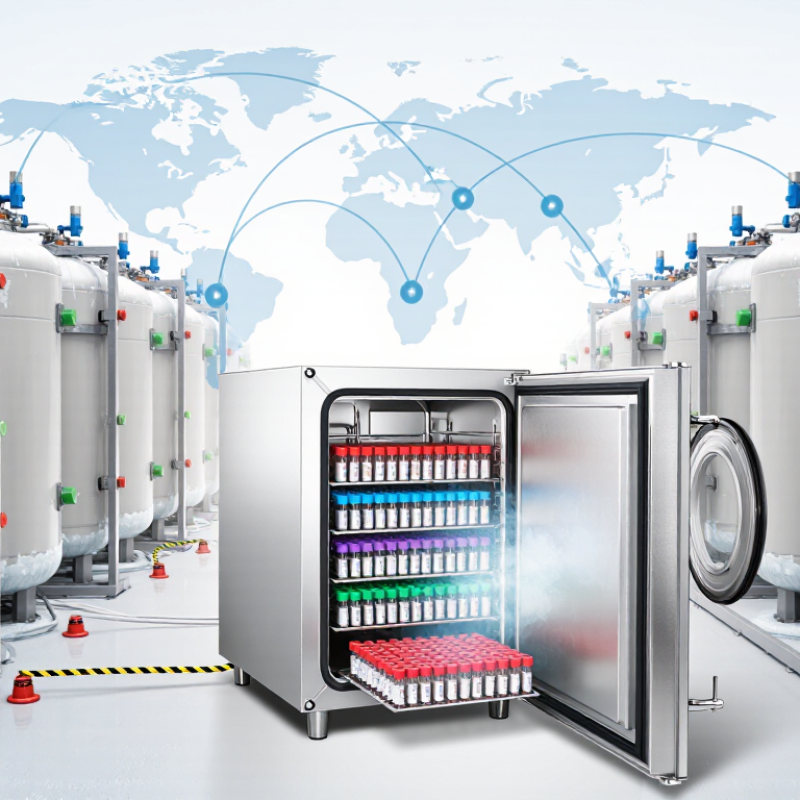
Cryo storage is the preservation of biological materials at ultra-low temperatures, usually below -130°C. At these temperatures, cellular activity nearly stops. Samples such as blood, tissue, cells, and genetic material can remain stable for extended periods. The goal is not simply to freeze a sample. It is to protect its identity, structure, and future research value.
In global biobanking, cryo storage supports long-term sample management across different facilities and countries. Samples may travel in validated temperature-controlled containers, with continuous monitoring during transit. Proper labeling, backup power, calibrated sensors, and documented handling procedures reduce avoidable risks. However, cryo storage is not a perfect solution. Repeated temperature changes can damage sensitive materials. A rushed transfer can compromise years of collection work. Storage systems also require trained staff, regular maintenance, and clear consent and data-governance practices that respect applicable laws.
Tips: Use a documented chain of custody for every sample. Record temperature readings before, during, and after transport. Keep duplicate samples in separate storage units when resources allow. Review emergency plans regularly, because equipment failure can happen without warning. Test recovery procedures with real containers, not only paperwork. Small gaps matter. A useful system should be reliable in daily practice, not merely impressive during an audit.
How Cryo Storage Preserves Biological Samples
Cryogenic storage protects biological samples by slowing molecular activity to an extreme level. In vapor-phase nitrogen systems, temperatures remain below -150°C, according to ISBER Best Practices for Repositories, 5th edition. Liquid nitrogen boils at approximately -196°C under standard pressure. These conditions reduce enzymatic reactions, cellular metabolism, and chemical degradation.
Temperature alone does not guarantee preservation. ISO 20387:2018 identifies traceability, monitoring, and risk management as essential biobanking controls. A sample may survive years in a cold tank, yet lose value through one missing identifier. Strong facilities record rack positions, access events, temperature alarms, and maintenance actions. Backup power matters. So does staff training.
In practice, vapor-phase storage can reduce direct contact with liquid nitrogen and support safer sample handling. It also creates operational challenges. Frost can obscure labels. Poorly planned racks waste space. Alarm delays can become expensive. Cryo storage preserves the sample, but not every mistake around it. A 2024 biobanking market report from Research and Markets projects continued global expansion, increasing pressure for reliable, scalable repositories. Some workflows still need refinement. Regular audits and independent quality checks help expose those weak points before samples become irreplaceable.
Key Benefits for International Biobank Networks
Why Choose Cryo Storage for Global Biobanking?
International biobank networks need stable preservation across borders, climates, and operating teams. Cryogenic storage keeps many biological materials at extremely low temperatures, slowing chemical and cellular change. Samples remain more consistent during long-term research programs. That matters.
In practice, reliable networks combine validated storage protocols with continuous temperature monitoring. Backup power, duplicate alarm pathways, and scheduled equipment checks reduce avoidable risks. Clearly labeled cryovials support accurate retrieval across facilities. Digital chain-of-custody records also help teams confirm each transfer, handler, and storage location. Shared procedures make collaboration easier, even when laboratories use different languages or workflows.
Cryo storage is not effortless. Freezer performance can vary, and manual handling still creates opportunities for mistakes. A rushed retrieval may expose samples to damaging temperature shifts. Staff need regular training, documented response plans, and realistic emergency exercises. Network leaders should also review capacity before collections expand. Empty space today may prevent difficult transfers tomorrow. Local requirements, ethical approvals, and material transport rules must guide every decision. These details are easy to overlook during rapid international growth. Careful audits, independent quality reviews, and transparent incident reporting strengthen confidence among researchers, donors, and partner institutions. Still, no system removes every uncertainty. Regular reflection can reveal weak points before they affect valuable samples.
Cryo Storage Standards, Systems, and Security
Why Choose Cryo Storage for Global Biobanking?
Cryo storage supports long-term preservation when biological materials must remain stable across borders and time zones. Reliable facilities follow documented standards for temperature control, sample identification, maintenance, and emergency response. Storage plans should define acceptable temperature ranges, alarm limits, inspection schedules, and staff responsibilities. Small errors matter. A mislabeled vial can compromise months of research.
A robust system combines liquid nitrogen or mechanical cooling with continuous monitoring. Sensors should record temperature, humidity where relevant, nitrogen levels, and door activity. Independent alarms can alert trained personnel before samples face serious exposure. Backup power, spare components, and validated transfer procedures add practical resilience. Yet redundancy is not perfection. A second freezer may fail during a poorly planned transfer.
Security includes controlled access, encrypted records, visitor logs, and role-based permissions. Each sample needs a traceable history, from receipt to storage location and authorized movement. Regular audits can reveal weak points, such as shared passwords or incomplete maintenance records. Staff training should cover cryogenic hazards, protective equipment, spill response, and communication during outages. These details often seem routine until an alarm sounds at 3 a.m. Global operations also require clear documentation, qualified local partners, and procedures aligned with applicable regulations. Human review remains essential, because automated alerts cannot explain every unusual reading.
Why Choose Cryo Storage for Global Biobanking?
Cryo Storage Standards, Systems, and Security
Cryogenic storage substantially reduces biological activity and helps preserve samples for long-term biobanking. The chart compares commonly used biobanking environments by nominal operating temperature. Actual setpoints, alarm limits, monitoring intervals, and sample-handling procedures should be defined through validated SOPs, equipment qualification, risk assessment, and applicable biobanking requirements such as ISO 20387.
Typical reference points: controlled room-temperature storage is approximately 20–25°C, refrigerated storage approximately 2–8°C, ultra-low-temperature storage approximately −80°C, liquid-nitrogen vapor-phase storage generally below −150°C, and liquid-phase nitrogen storage approximately −196°C.
Challenges in Managing Global Cryogenic Biobanks
Why Choose Cryo Storage for Global Biobanking?
Managing a global cryogenic biobank involves more than placing samples in liquid nitrogen. It requires stable procedures, trained staff, and continuous environmental monitoring. In daily operations, teams may handle blood, tissue, or cell samples across several time zones. Each vial needs a readable label, verified location, and documented transfer history. Small errors can become expensive.
Temperature control remains a central challenge. A brief warming event may damage sensitive biological material before staff notice it. Backup storage, alarm testing, and emergency power systems reduce this risk. However, these safeguards need regular review. A tested alarm is useful only when someone responds quickly. We have learned that written procedures can look complete while hiding practical gaps.
Global transport adds another layer of difficulty. Dry shippers must be prepared correctly, inspected, and tracked during transit. Import documents, biosafety requirements, and local handling rules may differ between regions. Delays at a checkpoint can affect schedules and storage capacity. Digital records improve visibility, but they do not replace physical inspections. Sometimes, a damaged label or missing timestamp reveals more than a polished report. Teams should question unusual data, repeat critical checks, and record decisions clearly.