China’s cryogenic storage industry is expanding with LNG, industrial gases, healthcare, and food processing. Market reports show strong demand, but their figures vary. MarketsandMarkets projects the global cryogenic equipment market to grow steadily through 2028. Grand View Research also identifies LNG infrastructure and industrial gas applications as major growth drivers. These differences matter. They remind readers to examine methods, not only headline numbers.
R. B. Scott, a respected cryogenic engineering authority, defined the field clearly: “Cryogenics is the science and technology of temperatures below 120 K.” That principle shapes every storage tank discussed here. At these temperatures, insulation quality, vacuum stability, pressure control, and material behavior become practical safety issues. A small seal weakness can increase boil-off. A poor weld can create costly downtime.
This guide examines China’s top 10 cryogenic storage tank manufacturers through observable criteria. These include manufacturing experience, product range, testing capability, certifications, project references, and after-sales support. Public information is not always consistent. Some companies publish detailed technical data, while others provide limited evidence. Therefore, this list should support due diligence, not replace it. Buyers should verify tank capacity, design pressure, working medium, insulation structure, inspection records, and local service resources. The best supplier is not always the largest. It is the one that matches the application precisely, from a compact liquid nitrogen vessel to a large LNG storage system. Mistakes remain possible, especially when rankings rely on incomplete public data.
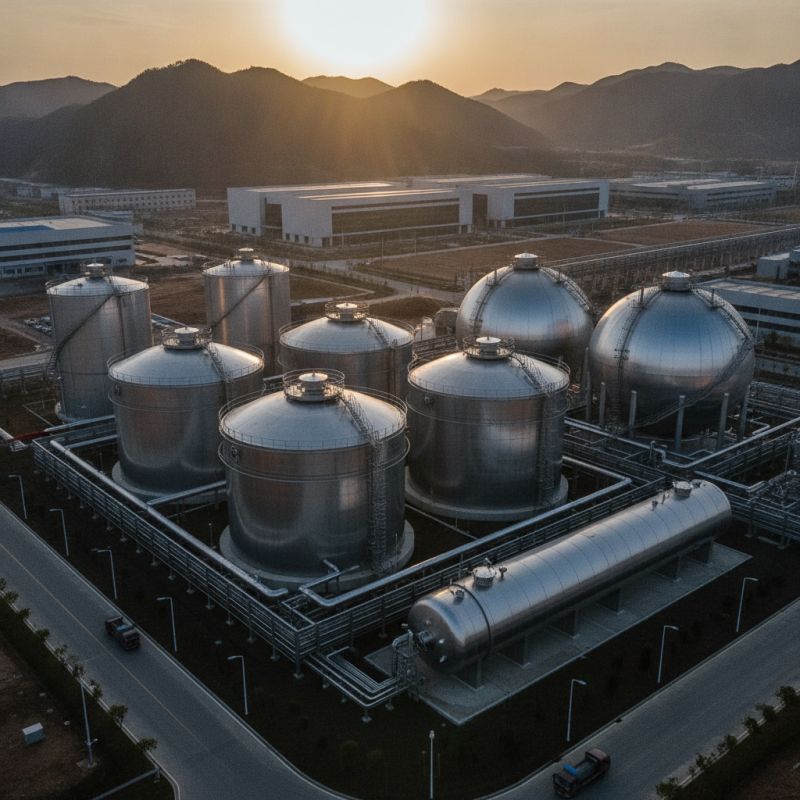
Cryogenic storage tanks are double-wall vessels designed to hold liquefied gases at extremely low temperatures. A vacuum and insulation layer reduce heat transfer between the inner vessel and the surrounding air. Common contents include liquid nitrogen, oxygen, argon, and natural gas. Their design must control pressure, evaporation, and material contraction during daily operation.
In China, these tanks support hospitals, food processors, laboratories, electronics plants, and energy facilities. A stable supply of liquid gas can protect medical treatment, freezing processes, and precision manufacturing. Tank capacity varies from small on-site units to large installations serving entire industrial parks. Engineers usually assess working pressure, insulation performance, corrosion resistance, foundation strength, and unloading arrangements before production.
Quality depends on more than polished appearance. Factory traceability, weld inspection, pressure testing, vacuum checks, and clear maintenance records matter greatly. Practical site reviews should also examine valves, gauges, relief devices, and emergency access. Small details matter. A poorly positioned pipeline can complicate maintenance or increase operational risk. Chinese manufacturers may offer different levels of customization, but buyers should verify applicable standards and inspection documents independently. Even a technically sound tank can perform poorly when installation, operator training, or periodic inspection is neglected. This point is easy to underestimate.
China Top 10 Cryogenic Storage Tank Manufacturers: Key Standards for Evaluating Cryogenic Tank Manufacturers
When evaluating cryogenic tank manufacturers in China, begin with applicable standards, not rankings. Check compliance with the GB/T 18442 series, ASME Section VIII, EN 13458, or ISO 21009, depending on the project location and vessel type. Certificates should match the actual design scope. A general quality certificate proves little.
Examine design records and production evidence. Ask for material certificates for stainless steel, qualified welding procedures, welder records, and non-destructive testing reports. Tanks for liquid oxygen, nitrogen, or argon need accurate insulation and pressure control. Vacuum performance matters. Request helium leak test results, vacuum decay data, hydrostatic test records, and relief valve settings. Small details matter.
Look inside the factory process. Clean assembly areas, protected pipe ends, calibrated instruments, and traceable serial numbers show practical discipline. Engineers should explain heat leakage, filling cycles, pressure rise, and emergency venting in clear terms. After-sales support also deserves testing: response times, spare-part availability, inspection guidance, and field service coverage should be written into the contract.
A polished brochure is not proof. Ask for references from similar working conditions, not only large projects. I would also question unusually low prices, because thinner margins may hide weaker inspection or service. One limitation remains: documents can look complete while actual workmanship varies. An independent inspection before shipment may reveal what paperwork misses.
China’s Top 10 Cryogenic Storage Tank Manufacturers should be assessed through evidence, not advertising claims. The International Energy Agency reported global LNG trade at about 401 million tonnes in 2023. This demand increases pressure on Chinese suppliers to deliver safer, larger, and more efficient storage systems. A reliable ranking should examine vacuum stability, insulation performance, welding quality, production capacity, and documented delivery records.
Technical compliance matters. Manufacturers should demonstrate alignment with standards such as ISO 21009-1, GB/T requirements, and applicable pressure-vessel rules. Buyers should also inspect factory testing, material certificates, pressure-test records, and emergency-service response times.
A tank may look excellent outside. Small vacuum losses can still increase evaporation costs.
The best candidates usually provide vertical and horizontal tanks, transportable units, and complete site support. Real experience appears in details: clean stainless-steel surfaces, protected valves, readable gauges, and stable readings after commissioning. The International Energy Agency’s 2024 gas market analysis also highlights continuing LNG infrastructure investment in Asia, supporting stronger demand for dependable storage equipment. However, rankings remain imperfect. Public data on Chinese production capacity and failure rates is limited, so claims should be checked through audits, customer references, and third-party inspection reports. Availability of spare valves and trained technicians deserves equal attention.
China’s top 10 cryogenic storage tank manufacturers compete across LNG, liquid oxygen, nitrogen, argon, hydrogen, and carbon dioxide systems. Their product ranges commonly include vertical vacuum-insulated tanks, horizontal transport tanks, microbulk vessels, and double-wall LNG tanks. According to the IEA Gas Market Report 2024, global LNG trade reached approximately 404 million tonnes in 2023. This growth supports demand for larger tanks, stronger insulation, and safer filling systems.
Technology differences matter more than appearance. High-vacuum multilayer insulation reduces heat transfer, while perlite insulation offers a practical option for larger stationary vessels. Quality manufacturers should demonstrate welding qualification, pressure testing, vacuum performance, leak detection, and material traceability. ISO 21009-1 provides key requirements for static vacuum-insulated cryogenic vessels. In hydrogen applications, designers must also examine embrittlement, permeation, cycling fatigue, and rapid pressure changes. A polished brochure proves little. Field records matter more. Some purchasing teams still compare price first, which can create expensive maintenance later.
Tips: Check working volume, design pressure, holding time, medium compatibility, and local certification before requesting quotations. Ask for test reports, not promises. Compare lifecycle cost, inspection access, valve quality, and spare-part support. Data from the IEA and major industrial-gas outlooks can guide demand planning, but site conditions remain decisive. A tank suitable for oxygen may not suit hydrogen. That distinction is easy to miss.
| No. | Manufacturer Profile | Typical Product Type | Typical Geometric Capacity | Design Temperature | Typical Design Pressure | Insulation Configuration | Key Manufacturing Technologies | Main Industry Applications | Common Standards and Compliance Routes |
|---|---|---|---|---|---|---|---|---|---|
| 01 | Profile A Large stationary systems |
Vertical vacuum-insulated cryogenic storage tank for liquid oxygen, nitrogen, argon, or LNG | 50–5,000 m³ | Approximately −196°C to −162°C, depending on medium | 0.8–2.0 MPa design pressure | Perlite or multilayer insulation in a vacuum jacket; carbon-steel outer shell | Low-temperature stainless-steel inner vessel, automated longitudinal and circumferential welding, vacuum evacuation, multilayer thermal design, pressure-relief integration | Air-separation plants, LNG satellite stations, hospitals, electronics manufacturing, and chemical production | GB/T 18442 series, GB/T 150, TSG 23, applicable pressure-vessel inspection and welding qualification requirements |
| 02 | Profile B LNG equipment systems |
LNG storage tank, LNG buffer tank, and compact LNG fueling-station tank | 20–300 m³ | Approximately −162°C | 0.8–1.6 MPa design pressure | High-vacuum perlite or multilayer insulation with austenitic stainless-steel inner vessel | Low-boil-off design, vacuum-jacket fabrication, cryogenic piping prefabrication, tank pressure-control systems, and integrated safety valves | LNG vehicle fueling, industrial gas supply, distributed energy, marine fuel supply, and peak-shaving stations | GB/T 18442, GB/T 150, GB/T 20368 where applicable, TSG 23, and local LNG station safety requirements |
| 03 | Profile C Industrial gas tanks |
Vertical and horizontal fixed tanks for liquid nitrogen, oxygen, argon, and carbon dioxide | 5–200 m³ | Approximately −196°C to −78.5°C | 0.8–2.2 MPa design pressure | Vacuum jacket with perlite, composite powder, or multilayer insulation | Austenitic stainless-steel fabrication, orbital or high-quality manual welding, vacuum testing, thermal-contraction allowance, and customized valve manifolds | Metal fabrication, food freezing, laboratories, healthcare, wastewater treatment, and industrial gas distribution | GB/T 18442 series, GB/T 150, NB/T 47013 non-destructive testing methods, TSG 23, and relevant gas-safety codes |
| 04 | Profile D Microbulk solutions |
Small-to-medium microbulk tank with automatic filling, telemetry, and vaporization interface | 1–30 m³ | Approximately −196°C to −78.5°C | 1.0–2.4 MPa design pressure | Vacuum-insulated double-wall construction, normally using perlite or multilayer insulation | Compact skid integration, liquid-level monitoring, remote pressure monitoring, automatic changeover, and modular piping design | Clinics, restaurants, laboratories, welding workshops, small factories, and regional gas supply points | GB/T 18442, GB/T 150, TSG 23, electrical and instrumentation requirements for the installation environment |
| 05 | Profile E Transportable tanks |
ISO cryogenic tank container and road-transportable storage tank | 20–40 ft container formats; commonly 20–40 m³ | Approximately −196°C to −162°C | Typically 0.8–2.2 MPa design pressure | Vacuum multilayer insulation inside a protective outer jacket and container frame | Frame-load analysis, transport-impact design, cryogenic piping protection, container corner fitting integration, and leak testing | Intermodal transport of liquid gases, temporary supply, remote construction sites, and emergency gas distribution | Applicable pressure-vessel rules, ISO container requirements, ADR or IMDG requirements when relevant, and transport inspection regulations |
| 06 | Profile F Laboratory and medical |
Liquid nitrogen storage tank, laboratory dewar, and medical cryogenic storage vessel | 30 L–10 m³ | Approximately −196°C | Atmospheric or low-pressure service; pressurized versions commonly 0.2–1.6 MPa | Vacuum jacket with multilayer insulation; smaller units may use high-performance vacuum construction | Low-evaporation design, corrosion-resistant stainless steel, precision neck construction, level indication, and controlled venting | Biobanks, hospitals, fertility centers, universities, research laboratories, and pharmaceutical facilities | Product-specific pressure-vessel rules, medical or laboratory safety procedures, GB/T 18442 where applicable, and local installation requirements |
| 07 | Profile G Cryogenic process plants |
Process storage tank with custom inlet, outlet, recirculation, and vaporization connections | 30–1,000 m³ | Approximately −196°C to −78.5°C | 0.8–3.0 MPa design pressure | Vacuum powder or perlite insulation; multilayer systems for selected low-heat-leak designs | Process-system engineering, thermal stress analysis, customized nozzle layout, automatic pressure regulation, and integration with vaporizers and pumps | Petrochemicals, semiconductor gases, specialty chemicals, food processing, and industrial gas plants | GB/T 18442, GB/T 150, NB/T 47013, TSG 23, and project-specific process-piping and safety standards |
| 08 | Profile H Cryogenic energy storage |
LNG peak-shaving tank and liquid-air or liquid-gas energy-storage vessel | 100–10,000 m³, project dependent | Approximately −196°C to −162°C for common media | 0.6–2.0 MPa design pressure | Large-scale vacuum-perlite or multilayer insulation with thermal-bridge control | Low-boil-off optimization, thermal-cycle analysis, foundation and settlement assessment, pressure-management logic, and remote monitoring | Gas peak shaving, integrated energy stations, renewable-energy balancing, power generation, and industrial fuel storage | GB/T 18442, GB/T 150, TSG 23, fire-protection requirements, hazardous-area design rules, and project approval conditions |
| 09 | Profile I Specialty gas systems |
Customized storage tank for nitrous oxide, liquid carbon dioxide, or specialty cryogenic media | 3–150 m³ | Approximately −78.5°C to −196°C, depending on medium | 1.0–3.5 MPa design pressure | Vacuum-insulated double-wall design with medium-specific thermal and pressure control | Medium compatibility assessment, corrosion control, pressure-cycle verification, specialized valve selection, and customized filling and unloading systems | Food and beverage processing, welding, chemical synthesis, medical gas supply, and pharmaceutical manufacturing | GB/T 18442 where applicable, GB/T 150, TSG 23, pressure-accessory requirements, and medium-specific safety regulations |
| 10 | Profile J Modular skid systems |
Packaged cryogenic storage and vaporization skid with tank, pump, vaporizer, and control cabinet | 1–100 m³ tank volume per modular package | Approximately −196°C to −78.5°C | 0.8–2.5 MPa design pressure | Vacuum-insulated tank combined with insulated cryogenic piping and cold-box components | Factory pre-assembly, modular piping, programmable control, pump and vaporizer matching, factory pressure testing, and simplified field commissioning | Temporary gas supply, hospitals, laboratories, food plants, construction projects, and remote industrial facilities | GB/T 18442, GB/T 150, TSG 23, NB/T 47013, electrical control-panel requirements, and site-specific safety standards |
China Top 10 Cryogenic Storage Tank Manufacturers: How to Select a Reliable Cryogenic Tank Manufacturer
Choosing among China’s top cryogenic storage tank manufacturers requires more than comparing prices. A reliable supplier should provide verified design calculations, material certificates, welding records, and pressure-test results. Check whether the factory follows recognized standards, such as ISO, ASME, or applicable national requirements. Ask for records showing traceability from steel plate to finished vessel. A clear inspection plan matters. So does experience with oxygen, nitrogen, argon, or other approved cryogenic applications.
Visit the production site when possible. Look for clean welding areas, calibrated testing equipment, controlled assembly procedures, and trained inspectors. Request references for tanks with similar volume, working pressure, insulation type, and delivery conditions. Confirm vacuum performance, relief-device settings, surface treatment, documentation, spare parts, and after-sales response times. A polished website is not proof. Neither is the lowest quotation. Some suppliers may answer quickly but provide vague technical details. That should invite careful reflection before signing.
Tips: Ask for a sample quality dossier before ordering. Compare warranty exclusions, not only warranty length. Require written acceptance criteria and independent inspection access. Check how the manufacturer handles leakage, pressure loss, or delayed maintenance. Small details matter. Even experienced buyers can overlook transport restraints or foundation loads, so have a qualified engineer review the final specification. Reliability is demonstrated through evidence, consistent communication, and accountable service—not impressive claims alone.
A reliable cryogenic tank manufacturer should demonstrate proven compatibility with the stored fluid, suitable operating-temperature capability, effective vacuum insulation, pressure control, safety protection, and compliance with applicable standards. The chart shows normal boiling points at 1 atmosphere; actual tank design conditions may vary with pressure and application.
Reference basis: Standard physical-property data for common cryogenic fluids at approximately 1 atm.