How to Use Well Plates for Effective Laboratory Experiments?
In the world of laboratory experiments, well plates stand out as essential tools for researchers. Dr. Emily Carter, a renowned expert in molecular biology, emphasizes, "Well plates are fundamental for precision in experimental design." These flat plates with multiple wells allow for simultaneous analysis of various samples, enhancing efficiency and accuracy.
Proper usage of well plates can significantly impact results. Each well serves as an independent environment, crucial for testing different conditions. However, inconsistency in sample preparation can lead to unreliable outcomes. Researchers must pay close attention to the uniformity of their techniques.
Moreover, the choice of well plate format can complicate results if not matched with the intended application. Each design suits specific experiments, yet many overlook this detail. Overall, a deep understanding of well plates and their applications is vital for achieving successful laboratory experiments.

Introduction to Well Plates and Their Applications in Laboratory Experiments
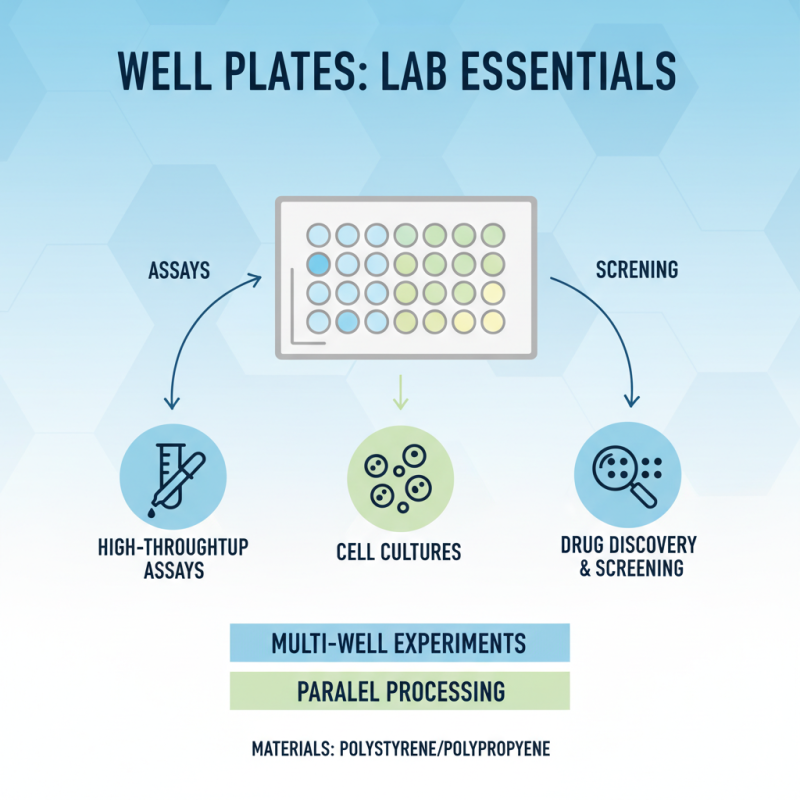
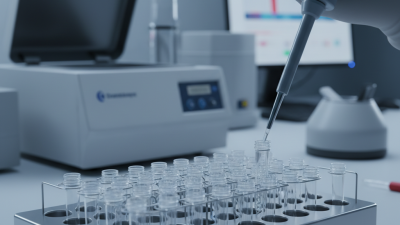
Well plates, also known as microtiter plates, are essential tools in laboratory settings. They come in various configurations, allowing researchers to conduct multiple experiments simultaneously. Typically made from polystyrene or polypropylene, these plates have wells arranged in rows and columns. Each well acts as a miniature reaction chamber, perfect for assays, cell cultures, and more.
Using well plates can enhance efficiency in experiments. Researchers can test different variables in parallel, reducing time and resource consumption. For example, a 96-well plate allows testing of 96 samples at once. This method not only streamlines workflows but also increases data reliability. However, one must be cautious about cross-contamination between wells. Proper sealing and careful pipetting techniques are crucial.
Despite their advantages, challenges arise when using well plates. Selection of appropriate materials is vital based on the experiment type. Not all wells are suitable for all applications. Furthermore, ensuring consistent results can be tricky. Variability in sample preparation, for instance, can affect assay outcomes. Regular assessment and optimization of techniques are necessary to address these issues effectively.
Types of Well Plates: Materials, Sizes, and Features for Specific Experiments
Well plates are essential tools in laboratory experiments. They come in various materials, sizes, and features that cater to different needs. Common materials include polystyrene, polypropylene, and glass. Each material has its benefits. For instance, polystyrene is ideal for cell culturing due to its excellent transparency. Glass well plates offer superior chemical resistance.
Sizes also vary among well plates. You can find plates with different well numbers, from 6 to 384. Smaller plates, like 96-well plates, are great for high-throughput screening. Bigger plates may be necessary for larger-scale experiments. Understanding the size you need can save time and resources.
Tips: Always ensure the well plate matches your experiment's requirements. Consider the compatibility of the materials with your samples. Avoid cross-contamination by using dedicated plates for specific assays. Each detail matters significantly in obtaining accurate results. If using a plate for the first time, run a small-scale test before proceeding. This practice can help identify any unforeseen issues.
Well Plates Usage Comparison in Laboratory Experiments
Best Practices for Preparing and Handling Well Plates in the Lab
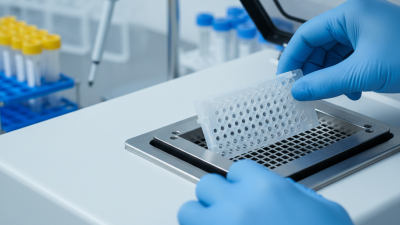
Preparing and handling well plates requires attention to detail. Cleanliness is crucial. Ensure that your workspace is sanitized. Use proper gloves to avoid contamination. This can significantly impact your results. Environmental controls, such as humidity and temperature, should be monitored. Temperature fluctuations can lead to inconsistent experimental outcomes.
Label each well plate meticulously. Clear labels prevent mix-ups and enhance reproducibility. If mistakes happen, it’s essential to reflect on what went wrong. Keeping a log for each experiment can help identify patterns over time. Be aware of changes in your protocol. Adapting methods may lead to improved results.
With careful handling, even minor adjustments can yield significant gains. However, don’t overlook the importance of routine checks. Regularly inspecting your supplies ensures reliability. Consider training sessions for team members. Shared knowledge fosters a more effective laboratory environment. Always aim for precision, but be open to learning from every experiment.
How to Use Well Plates for Effective Laboratory Experiments
| Parameter |
Best Practice |
Notes |
| Plate Type |
Choose the correct type (e.g., 96-well, 384-well) |
Consider sample size and number of tests |
| Preparation |
Clean and sterilize before use |
Use UV light or autoclave |
| Sample Volume |
Follow recommended volume for each well |
Avoid overfilling to prevent cross-contamination |
| Temperature Control |
Maintain at ideal temperature throughout experiment |
Use incubators if necessary |
| Data Recording |
Record data systematically |
Use software for accuracy |
| Post-Experiment Cleaning |
Dispose of plates safely, decontaminate if necessary |
Follow waste disposal regulations |
Techniques for Accurate Measurement and Analysis Using Well Plates
Well plates are essential tools in laboratories for high-throughput screening and the precise measurement of samples. Their design allows for multiple experiments to be conducted simultaneously, improving efficiency. Research from the Journal of Laboratory Automation reports that using well plates can increase sample throughput by up to 70%. This efficiency is crucial for busy labs that rely on accurate data.
Accuracy in measurement is vital. Calibration of pipettes and ensuring even mixing of samples are crucial steps. Small deviations in volume can lead to significant errors in results. A study published in Analytical Chemistry emphasizes that well plate assays must minimize variability to ensure reliability. This underscores the need for meticulous technique when using well plates.
However, even the most reliable techniques have their limitations. Cross-contamination is a persistent issue in well plate experiments. A 2022 report cited that nearly 15% of experiments were compromised due to this factor. Experimenters must regularly check for cleanliness and handle plates with care. Attention to detail can greatly reduce errors and improve the robustness of findings.
Troubleshooting Common Issues When Using Well Plates in Experiments
Troubleshooting common issues when using well plates is crucial for successful laboratory experiments. One of the most frequent problems is evaporation, particularly in long incubations. Studies have shown that up to 20% of sample volume can be lost to evaporation in multi-well plates. This loss can affect concentration and yield. To mitigate this, consider using adhesive covers or parafilm to seal the wells.
Another issue is inconsistent cell growth or reactions. Variability may stem from uneven distribution of cells or reagents. A 2021 report highlighted that improper mixing could lead to 30% variability in results. Using a plate shaker or magnetic stirrer prior to pipetting can help ensure even distribution. Additionally, monitoring temperature and environmental conditions is key. Fluctuations can lead to significant discrepancies in experimental outcomes.
Finally, contamination is an ever-present risk. Results can be compromised by cross-contamination between wells. According to industry data, 15% of all lab errors are due to contamination issues. Employing sterile technique, using sterile equipment, and regularly cleaning surfaces can help reduce this risk. Reflecting on these common issues allows researchers to optimize their use of well plates and achieve more reliable results.