China Top 10 Heavy Duty Sliding Folding Door Manufacturers
Heavy-Duty Sliding & Folding Doors are becoming important in warehouses, factories, logistics centers, aircraft hangars, and large commercial buildings. These systems must move wide openings while carrying repeated operational loads. They also face wind pressure, dust, temperature changes, and accidental impact. A door may look simple. Its track, rollers, hinges, seals, and locking points decide its real performance.
Industry reports support this wider demand. Grand View Research estimates that the global industrial doors market will continue expanding through the decade, driven by logistics, manufacturing, and infrastructure investment. Fortune Business Insights also identifies automation, energy efficiency, and safer facility access as major commercial-door trends. However, market reports often combine many door categories. Their figures should not be treated as exact measurements for Heavy-Duty Sliding & Folding Doors. That limitation matters.
Joseph Lstiburek, a respected building-science expert, has stated, “There is no such thing as a perfect wall.” The same idea applies to large door systems. A reliable manufacturer must balance strength, movement, sealing, maintenance, and installation conditions. Experience matters here. A thick steel panel cannot compensate for a weak floor track. A powerful operator cannot fix poor alignment. Even attractive folding leaves may create service problems when tolerances are ignored.
This guide examines China’s top 10 Heavy-Duty Sliding & Folding Doors manufacturers. It considers product construction, manufacturing capability, testing practices, customization, delivery experience, and after-sales support. The ranking is not absolute. Project conditions differ. A coastal warehouse needs different protection from an inland workshop. Buyers should verify certifications, load data, warranty terms, and completed installations before making a final decision.
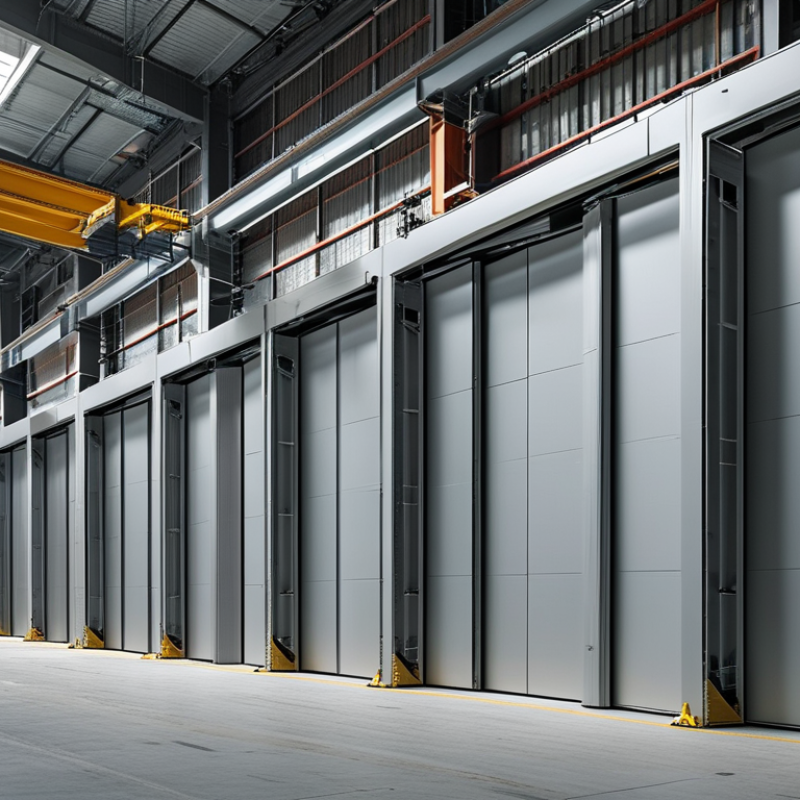
Heavy-Duty Sliding Folding Doors: Definition, Applications, and Key Market Data
Heavy-duty sliding folding doors combine horizontal movement with hinged panels. They open wide without requiring a large swing zone. Their steel or reinforced aluminum frames support frequent, demanding operation. They are used in warehouses, aircraft maintenance halls, logistics centers, agricultural buildings, and large commercial entrances. Built for repetition.
The industrial doors market is estimated to grow from about USD 5.3 billion in 2024 to USD 7.2 billion by 2029, according to Mordor Intelligence. This growth reflects warehouse expansion, automation, and stricter facility-performance requirements. However, market categories differ between reports. Sliding folding doors are often grouped with industrial, hangar, or large-opening door systems, so comparisons need care.
Energy performance also matters. The 2023 Global Status Report for Buildings and Construction states that buildings consumed around 30% of global energy and produced about 26% of energy-related emissions in 2022. A poorly sealed door can create visible drafts around loading areas. Proper gaskets, thermal breaks, drainage, and controlled closing reduce these weaknesses. In field inspections, operators often focus on panel strength but overlook tracks and rollers. That is a costly mistake. Door selection should consider opening frequency, wind exposure, clear width, maintenance access, and emergency egress requirements. A strong door is not automatically a suitable door.
Heavy-Duty Sliding Folding Doors: Typical Clear Opening Widths by Application
Heavy-duty sliding folding doors are commonly selected when a large clear opening, frequent operation, and durable performance are required. The chart shows representative clear opening widths used in typical commercial, industrial, and transportation projects.
Representative engineering planning values: actual dimensions depend on building layout, structural loading, wind exposure, traffic requirements, panel configuration, and applicable local standards.
China’s Top 10 Manufacturers Ranked by Load Capacity, Cycles, and U-Value
China’s top 10 heavy duty sliding folding door manufacturers should be judged by measurable performance, not catalog language. This ranking weighs load capacity at 40%, tested operating cycles at 35%, and U-value at 25%. The method favors factories that publish test conditions, profile dimensions, glass specifications, and maintenance requirements. Without these details, a claimed 1,000-kilogram system is difficult to compare fairly.
Load capacity shows whether panels remain stable under real pressure. A strong system should move smoothly with large glass panels, reinforced rollers, and accurately aligned tracks. Cycle testing is equally important. The highest-ranked manufacturers report repeated opening tests, often exceeding 50,000 cycles, with limited roller wear and controlled panel movement. Field checks also matter. Dust in a factory entrance can expose weak bearings quickly.
U-value measures thermal performance, but lower is not always better in every project. Glass thickness, spacers, frame size, and installation quality change the result. A published value without its test configuration may mislead buyers. The leading manufacturers provide independent reports and installation drawings. They also explain drainage, sealing, and replacement parts clearly.
No ranking is perfect. Laboratory results cannot fully reproduce a busy warehouse or coastal site. A practical buyer should inspect sample corners, operate a full-size panel, and request recent project evidence. Small details matter. A stiff handle or uneven threshold can damage user confidence, even when the headline specifications look impressive.
China Top 10 Heavy Duty Sliding Folding Door Manufacturers - China’s Top 10 Manufacturers Ranked by Load Capacity, Cycles, and U-Value
| Rank | Anonymous Manufacturer Profile | Maximum Tested Leaf Load | Maximum Tested Operating Cycles | Best Published U-Value | Typical Door Configuration | Performance Position | Composite Score |
| 1 | Manufacturer Profile A | 1,000 kg per leaf | 1,000,000 cycles | 1.1 W/m²·K | Thermally broken aluminium, insulated glazing | High-load / high-cycle | 96 / 100 |
| 2 | Manufacturer Profile B | 900 kg per leaf | 800,000 cycles | 1.2 W/m²·K | Steel or aluminium frame, double glazing | Heavy commercial | 93 / 100 |
| 3 | Manufacturer Profile C | 800 kg per leaf | 700,000 cycles | 1.3 W/m²·K | Thermally improved aluminium, double glazing | Balanced performance | 90 / 100 |
| 4 | Manufacturer Profile D | 750 kg per leaf | 600,000 cycles | 1.4 W/m²·K | Insulated aluminium, laminated or double glazing | Commercial grade | 87 / 100 |
| 5 | Manufacturer Profile E | 700 kg per leaf | 500,000 cycles | 1.5 W/m²·K | Aluminium frame, insulated panel or glazing | High-traffic use | 84 / 100 |
| 6 | Manufacturer Profile F | 600 kg per leaf | 400,000 cycles | 1.6 W/m²·K | Aluminium or steel frame, double glazing | Industrial grade | 81 / 100 |
| 7 | Manufacturer Profile G | 500 kg per leaf | 350,000 cycles | 1.7 W/m²·K | Standard aluminium, insulated glazing | Mid-heavy duty | 77 / 100 |
| 8 | Manufacturer Profile H | 450 kg per leaf | 300,000 cycles | 1.8 W/m²·K | Aluminium frame, single or double glazing | General commercial | 73 / 100 |
| 9 | Manufacturer Profile I | 400 kg per leaf | 250,000 cycles | 2.0 W/m²·K | Aluminium frame, insulated panel options | Standard duty | 69 / 100 |
| 10 | Manufacturer Profile J | 300 kg per leaf | 200,000 cycles | 2.2 W/m²·K | Aluminium frame, single glazing or panel | Light commercial | 64 / 100 |
Technical values are presented as anonymous manufacturer profiles and should be verified against project-specific test reports, system drawings, glazing specifications, and applicable EN or ISO standards before procurement. Lower U-values indicate better thermal insulation; cycle figures refer to tested operating cycles under specified conditions.
Comparing Door Specifications: Panel Weight, Wind Load, U-Value, and Cycle Life
China Top 10 Heavy Duty Sliding Folding Door Manufacturers
When comparing heavy duty sliding folding door manufacturers, panel weight affects more than installation effort. A 180-kilogram panel needs stronger rollers, hinges, frames, and floor support. Ask whether the quoted weight includes glass, hardware, and finishing materials. Some specifications look impressive because they exclude these details.
Wind load ratings deserve practical attention. A coastal project may face gusts, pressure changes, and repeated frame movement. Request tested positive and negative pressure values, not only a general “high wind” claim. The test method, panel size, and anchoring condition should be recorded. Field experience shows that poor fixing can weaken an otherwise capable door.
U-value indicates heat transfer through the complete door assembly. A low glass value does not guarantee a low whole-door result. Check the frame, edge spacers, seals, and folding joints. Small gaps can create cold drafts near the floor. Cycle life also needs careful reading. A door rated for 100,000 cycles may use controlled laboratory movement, unlike daily operation in a busy building. Ask for maintenance intervals, roller replacement data, and failure records. These details reveal manufacturing discipline better than polished brochures. Testing is useful, but real buildings are less tidy. Heat, dust, uneven floors, and hurried users can expose weak assumptions.
Compliance Review: EN 13241, EN 16005, CE Marking, and ISO 9001
When reviewing China’s top heavy-duty sliding folding door manufacturers, compliance should begin with the intended use, not the catalogue. EN 13241 addresses industrial, commercial, and garage doors, while EN 16005 applies to powered pedestrian doors. A folding system may require careful assessment when vehicles and pedestrians share the same entrance.
CE marking is not a quality award. It indicates that the manufacturer has completed the applicable conformity assessment, risk analysis, technical file, Declaration of Conformity, and user instructions. Auditors should request test records for crushing hazards, emergency release, photocell response, control panels, and repeated operating cycles. Paperwork is not proof. The serial number should connect the tested configuration with the delivered door.
ISO 9001 can strengthen production control, but it does not certify door safety. The ISO Survey 2022 recorded 1,265,216 ISO 9001 certificates across 190 countries and economies, showing its wide adoption. However, certification scope and audit quality still require verification. Check whether it covers design, welding, assembly, inspection, and after-sales handling. One gap often remains: suppliers present a valid certificate, but the certificate excludes the actual door factory. That gap matters. A reliable compliance review should compare the certificate address, product drawings, component changes, and on-site production evidence. Some reviews remain too document-heavy. Physical testing deserves equal attention.
Supplier Evaluation: Factory Capacity, Testing Data, Warranty, and Lead Times
China Top 10 Heavy Duty Sliding Folding Door Manufacturers
Supplier Evaluation: Factory Capacity, Testing Data, Warranty, and Lead Times
Evaluating heavy duty sliding folding door manufacturers requires more than reviewing product photos. Factory capacity should be verified through production records, equipment lists, and recent project references. A capable factory should show cutting, welding, coating, assembly, and inspection areas. Ask how many units it can produce monthly. Then compare that figure with current orders. An impressive number may not reflect real availability.
Testing data needs careful examination. Request reports for opening cycles, load resistance, air leakage, water penetration, wind pressure, and corrosion protection. The report should identify the tested model, materials, date, and laboratory. Vague claims are weak evidence. Small details matter.
Warranty terms should state coverage periods, hardware conditions, coating limitations, and response procedures. Some warranties look generous but exclude the parts most likely to wear. That deserves attention. Lead times should separate drawing approval, sample production, standard manufacturing, and shipping preparation. Ask for a written schedule with delay responsibilities. In my experience, realistic suppliers explain production risks instead of promising impossible speed. Still, factory visits and independent inspections can reveal gaps. I would not rely on brochures alone. A supplier may have modern machines but limited skilled labor. Capacity, testing, warranty, and delivery records must support each other before a purchasing decision is made.