What Are the Top ATS Switch Manufacturers in China?
Choosing an automatic transfer switch (ATS) manufacturer in China takes more than comparing prices and product photos. These devices help transfer a load between power sources when the normal supply fails. Their performance matters in settings such as data rooms, factories, hospitals, and commercial buildings.
Searches for “Switch Ats” often lead to suppliers with similar-looking catalogs. The details behind those catalogs can differ. Buyers should examine switching ratings, operating modes, controller functions, enclosure options, and compatibility with their generators or utility supplies. Ask for current technical documents and test reports, and check that model numbers match the products being quoted. A neat brochure is not proof.
The most useful comparison also covers production quality and support after delivery. Request clear information about inspection procedures, component traceability, customization limits, spare parts, and commissioning guidance. A supplier’s response to specific questions can reveal more than broad claims about experience. Still, one email exchange is only a small signal. Verify important claims through references, documentation, and appropriate independent checks.
This guide looks at prominent ATS manufacturers in China and the factors that help distinguish them. It is not a universal ranking; the right choice depends on load requirements, project conditions, and service expectations. Some buyers may focus on price too early. That can be a costly shortcut. A careful shortlist should connect product evidence with the actual installation, rather than assume every ATS fits every application.
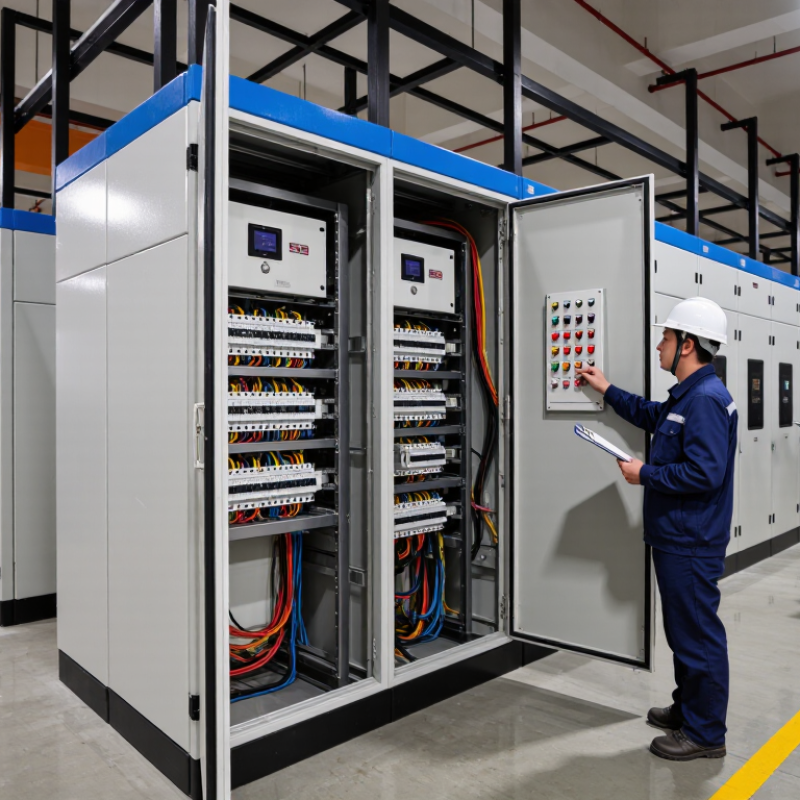
What Is an Automatic Transfer Switch (ATS)?
An automatic transfer switch (ATS) moves an electrical load between two power sources. It commonly monitors utility power and a standby generator. If voltage or frequency moves outside configured limits, the controller can signal the generator to start and transfer the load after a delay. When utility power stabilizes, the ATS can switch back according to its settings. That pause matters. It helps avoid unnecessary switching during brief disturbances.
An ATS does not generate electricity; it selects the available source. Common designs use open transition, briefly disconnecting one source before connecting the other. Sensitive equipment may need a different arrangement, so the site’s load and operating needs should guide selection. In practice, a wiring diagram can look simpler than a real installation. Cable length, heat, dust, and maintenance access all matter. When comparing manufacturers in China, check rated current, voltage, pole configuration, transfer time, test records, and documentation for the specific model. Ask how the switch behaves when a source fails or returns unexpectedly. A specification sheet is useful, but it cannot answer every site-specific question.
How an Automatic Transfer Switch (ATS) Works
This conceptual sequence shows how an ATS responds to a utility outage, transfers a load to generator power, and returns it after utility power is restored. Values indicate status only: 1 = available or supplying the load; 0 = unavailable or not supplying the load. Timing varies by system and settings.
How ATS Switches Work and Where They Are Used
An automatic transfer switch (ATS) monitors the normal power supply and connects a load to an alternate source when voltage fails or leaves preset limits. It may also signal a standby generator to start, then wait until its output is stable. The switch does not create electricity. It routes it.
In a typical open-transition system, the ATS disconnects one source before connecting the other. A brief interruption is expected. For sensitive equipment, that pause matters. Closed-transition designs can transfer with less interruption, but require compatible, synchronized sources. IEC 60947-6-1 sets technical requirements for transfer switching equipment. A specification should also define current rating, number of poles, sensing settings, and the intended transfer sequence.
ATS units are common in hospitals, data centers, commercial buildings, and facilities with standby generators. The U.S. Energy Information Administration reported that customers experienced an average 5.5 hours of power interruptions in 2022, including major events. That figure is a national benchmark, not a prediction for any one site. The real design question is what must stay powered, and for how long.
A server rack, a lift, and an emergency lighting circuit do not have identical needs. Small detail, big consequence. Teams should test transfer timing and generator readiness under realistic load; a switch can be correctly sized and still reveal gaps in the wider backup system.
How to Evaluate ATS Manufacturers in China
Evaluating an ATS manufacturer in China means checking the engineering behind the quotation, not just its rated current. Ask for routine and type-test records, wiring diagrams, and clear transfer-time specifications. Confirm the design aligns with IEC 60947-6-1, the international standard for transfer switching equipment. Uptime Institute’s 2024 outage analysis reports that 54% of respondents said their latest significant outage cost at least $100,000. That figure is a reminder: a small switching fault can have a large operational impact.
Request a witnessed test using your actual voltage, load profile, and transfer sequence. Watch the unit move between sources; check interlocks, controller alarms, and whether bypass maintenance is supported. Inspect the production line and trace serial numbers to test reports. A supplier may provide strong documents, yet still struggle with consistent assembly. I would not treat one successful factory test as proof of long-term reliability. Ask how defects are recorded and corrected.
Tips: Request sample test records and a video of a full-load transfer. Ask who performs final inspection, and what happens when a test fails. Get spare-parts lead times in writing.
Leading ATS Switch Manufacturers in China
China’s leading ATS switch manufacturers serve data centers, factories, hospitals, and commercial buildings. Buyers should compare engineering capability, not just quoted price. Check rated current, pole configuration, transfer time, and open- or closed-transition operation. Ask for type-test evidence and clear short-circuit withstand ratings. These details matter when a generator starts under load.
The China Electricity Council’s 2024 electricity statistics reported national consumption of about 9.85 trillion kWh, up 6.8% year over year.
That growth raises the value of dependable backup-power systems, though it does not prove every site needs the same ATS.
A practical supplier review should include wiring diagrams, routine-test records, spare-part availability, and commissioning support. IEC 60947-6-1 is a useful reference for transfer-switch equipment. Still, certificates alone are not enough. Confirm that test documents match the exact model and configuration being purchased.
One detail is easy to miss: ask how the switch behaves during repeated transfers, not only during a single factory test.
How to Choose and Verify an ATS Supplier
What Are the Top ATS Switch Manufacturers in China?
Choosing an automatic transfer switch (ATS) supplier takes more than comparing prices. Match the switch’s rated current, voltage, number of poles, and short-circuit withstand rating to your installation. Ask for technical drawings and test reports that identify the exact model, not just a product family. Check that certificates and reports come from verifiable organizations and cover the configuration you plan to buy. Paperwork can look convincing. Details matter.
Tips: Request a sample unit and inspect its terminals, labels, wiring diagram, and enclosure finish. Ask how the supplier tests transfer time and operation under load. Verify factory capacity through a live video walkthrough or an independent inspection. Contact two recent customers, if possible, and ask about delivery accuracy, defects, and after-sales response.
Before ordering, confirm warranty terms, spare-part availability, production lead time, and who handles technical questions. Put agreed specifications and acceptance checks in the purchase documents. A small mismatch in coil voltage or control wiring can delay commissioning. I have seen tidy brochures leave important questions unanswered; a clear response to a specific technical question is often more useful than polished sales language.