
Customer Service

What Are the Top 10 Dual Torch Pipeline Welding Machines?

Choosing the right Dual Torch Pipeline Welding Machine requires more than comparing advertised welding speeds. Pipeline contractors must examine pipe diameter, wall thickness, joint preparation, wire-feed stability, torch spacing, and field service support. A machine that performs smoothly in a factory may struggle beside a dusty trench, where wind, vibration, and changing temperatures affect the weld pool.

Dr. John C. Villafuerte, a recognized welding technology author and engineer, emphasizes, “A sound weld begins with controlled heat, stable travel, and disciplined inspection.” This principle guides our evaluation of the top ten machines. We consider arc stability, synchronized torch movement, deposition efficiency, operator controls, and compatibility with common pipeline welding procedures. We also examine practical details, such as whether the control panel remains readable under harsh sunlight and whether technicians can replace a worn liner without extended downtime.

Real work reveals differences.

The best Dual Torch Pipeline Welding Machine should reduce cycle time without sacrificing penetration consistency or inspection results. However, no ranking is perfect. Soil conditions, crew experience, consumable selection, and maintenance habits can change performance considerably. Some machines appear impressive in brochures but deliver less predictable results during long production runs. Others may seem less advanced yet provide dependable operation and simpler repairs. This guide compares those strengths and weaknesses carefully, helping buyers make a more informed decision based on measurable performance rather than marketing claims. Safety procedures, qualified operators, and documented quality controls remain essential throughout every project.
What Are the Top 10 Dual Torch Pipeline Welding Machines?

Definition and Working Principles of Dual Torch Pipeline Welding Machines

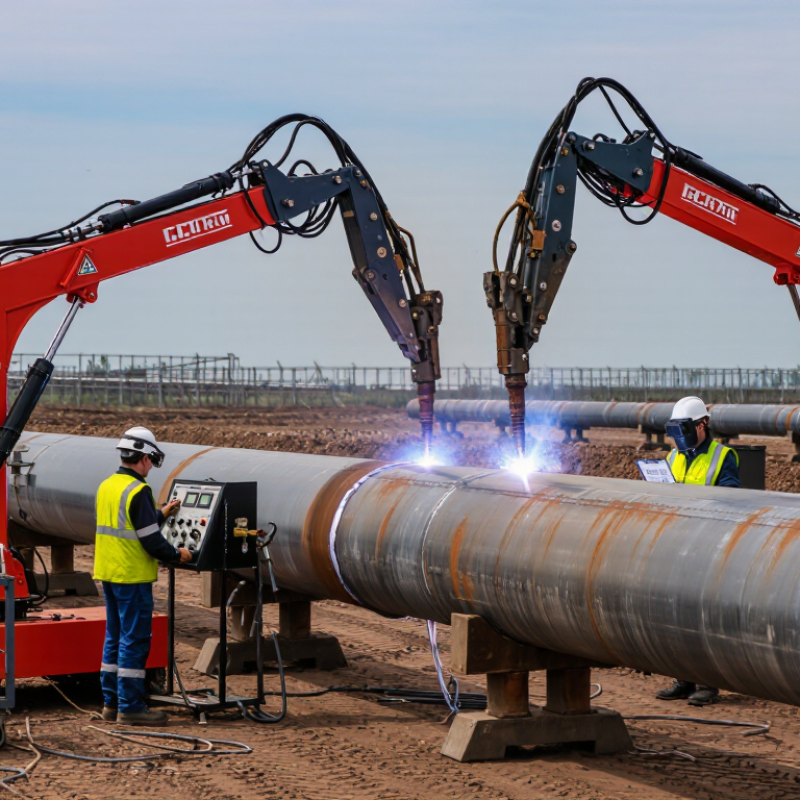
Dual torch pipeline welding machines are automated systems that use two welding torches on one joint. They are designed to improve productivity while maintaining controlled weld quality. Unlike single-torch equipment, they distribute heat across separate passes or welding zones. One torch may establish the root or hot pass, while the second follows closely for filling or reinforcement. This layout can reduce idle movement and support consistent bead formation. Control matters.

The working principle depends on synchronized travel, wire feeding, current, voltage, and shielding gas flow. During operation, sensors and a programmable controller coordinate both torches along the pipe circumference. The leading torch creates the initial molten pool. The following torch adds material after the joint reaches a suitable temperature. Correct spacing is critical. Excessive distance can cause poor fusion, while insufficient distance may create overheating or distortion. Experienced technicians also check arc stability, torch angle, and interpass temperature during trials.

When evaluating the top ten machines, buyers should examine control accuracy, adjustment range, pipe compatibility, maintenance access, and operator training requirements. Production speed alone can mislead. A faster machine may increase defects if its thermal control is weak. In practical testing, I would inspect weld profiles, restart behavior, and performance under changing site conditions. No system is perfect. Dust, wind, uneven alignment, and human setup errors still affect results, so reliable equipment needs careful procedures and realistic field verification.

Key Features for Comparing the Top Dual Torch Welding Machines

What Are the Top 10 Dual Torch Pipeline Welding Machines?

Comparing the top ten dual torch pipeline welding machines requires more than checking output amperage. Field experience shows that torch synchronization often matters more. Each torch should maintain a stable arc while operators adjust travel speed independently. Look for a clear control panel, remote adjustment, and reliable arc-start performance. A machine with 60% duty cycle may suit intermittent repairs, but continuous pipeline work demands stronger thermal management. The American Welding Society’s Welding Workforce Data report projects a U.S. shortage of roughly 330,000 welders by 2028. Easier controls can reduce training pressure, although they cannot replace skilled judgment.

Power stability is another practical divider. Compare generator compatibility, voltage tolerance, cooling design, and actual output under load. Check the torch spacing too. Narrow spacing may simplify small-diameter joints, while wider spacing can improve access around heavy pipe. The U.S. Bureau of Labor Statistics reports about 42,600 annual openings for welders, cutters, solderers, and brazers during its 2023–2033 projection period. That pressure makes maintenance access important. A machine that needs specialist service after every fault is not truly efficient.

Tips: Ask suppliers for independent load-test records, not only brochure ratings. Test both torches on a cold morning and during a long weld. Record arc stability, cable heating, noise, and restart time. Also question your own ranking criteria. The fastest machine may create more rework if alignment control feels vague. Data helps, but real pipe behavior still decides the purchase.

What Are the Top 10 Dual Torch Pipeline Welding Machines? – Key Features for Comparing the Top Dual Torch Welding Machines

Comparison based on commonly specified operating ranges for engine-driven, dual-operator pipeline welding systems. Actual specifications may vary by configuration and applicable safety requirements.
Rank Machine Configuration Welding Process Rated Output Duty Cycle Torch Arrangement Engine Type Wire Diameter Range Suitable Pipe Range Auxiliary Power Key Advantage
1 Heavy-Duty Dual-Operator System SMAW / GTAW 2 × 300 A DC 100% at 300 A Independent output controls 4-cylinder diesel 2.4–4.0 mm 24–60 in 8–12 kW High continuous welding capacity
2 High-Frequency Pipe Welding Unit SMAW / GTAW / HF GTAW 2 × 250 A DC 60% at 250 A Two torches with shared HF module 3-cylinder diesel 1.6–3.2 mm 12–42 in 6–10 kW Stable arc starts for root passes
3 Inverter-Assisted Dual Torch Unit SMAW / GTAW 2 × 250 A DC 60% at 250 A Separate inverter-controlled channels 3-cylinder diesel 1.6–3.2 mm 16–48 in 5–8 kW Lower fuel consumption and precise control
4 All-Position Pipeline Welder SMAW / GTAW 2 × 200 A DC 100% at 200 A Dual constant-current outputs 3-cylinder diesel 2.0–3.2 mm 20–48 in 5–7 kW Consistent output during long weld cycles
5 Compact Right-of-Way Welding Unit SMAW 2 × 200 A DC 60% at 200 A Two independent electrode holders 3-cylinder diesel 2.5–4.0 mm 16–36 in 4–6 kW Reduced footprint and easier transport
6 Multi-Process Dual Output Welder SMAW / GTAW / FCAW 2 × 250 A DC 60% at 250 A Independent CC/CV outputs 4-cylinder diesel 1.6–4.0 mm 24–48 in 8–10 kW Supports stick, TIG, and wire processes
7 Remote-Control Pipeline Unit SMAW / GTAW 2 × 225 A DC 60% at 225 A Dual remote amperage controls 3-cylinder diesel 2.0–3.2 mm 20–42 in 5–8 kW Adjustment from the weld location
8 Low-Noise Environmental Welder SMAW / GTAW 2 × 175 A DC 100% at 175 A Two constant-current channels 3-cylinder diesel with acoustic enclosure 2.0–3.2 mm 12–30 in 4–6 kW Lower operating noise near populated areas
9 Mobile Trailer-Mounted Unit SMAW / GTAW 2 × 250 A DC 60% at 250 A Two long-lead welding circuits 4-cylinder diesel 2.0–4.0 mm 24–60 in 7–10 kW Good mobility between weld stations
10 Entry-Level Dual Torch Welder SMAW 2 × 160 A DC 60% at 160 A Two manually adjusted outputs 2-cylinder diesel 2.5–3.2 mm 8–24 in 3–5 kW Simple operation and lower acquisition cost

Top 10 Dual Torch Pipeline Welding Machines and Their Applications

What Are the Top 10 Dual Torch Pipeline Welding Machines?

The top ten dual torch pipeline welding machines serve different field conditions. A shop rotator suits repeated pipe sections. A self-aligning rotator handles varying diameters. A track-mounted machine supports long, straight joints. A crawler works around fixed pipelines. An internal-external unit improves access on thick-wall pipe. A narrow-gap system reduces filler use. A stainless-steel process machine protects corrosion-sensitive joints. A high-frequency pipe welder supports clean starts. A positioner helps awkward elbows and flanges. A remote-controlled unit improves access in confined work areas. Each configuration can raise productivity when both torches share heat and travel speed correctly.

In practical applications, dual torches often complete root, hot-pass, fill, or cap work with controlled timing. One torch may preheat while the other deposits metal. This arrangement can shorten pauses around large-diameter pipe. It also helps maintain a steady bead profile on long seams. However, alignment errors can create uneven penetration. I have found that operator training matters as much as machine capacity. Real sites are rarely perfect. Wind, wet surfaces, poor grounding, and inconsistent fit-up still affect results. Machine selection should match pipe diameter, wall thickness, joint design, power supply, and transport limits. Check duty cycle and torch cooling before purchase.

Tips: Test both torches on sample joints before field deployment. Measure arc spacing carefully. Keep cables separated from hot steel. Record travel speed, current, voltage, and gas flow. Review the weld visually and through approved inspection methods. A machine that looks fast may still waste time during setup. That detail is easy to miss.

Safety Standards and Operating Practices for Pipeline Welding

When comparing the top 10 dual torch pipeline welding machines, safety must guide the decision. Two simultaneous arcs can increase heat, glare, fumes, and coordination demands. The International Labour Organization reported 2.93 million work-related deaths annually in its 2023 safety estimates. Welding crews need controls that match this reality, not just faster production.

Follow API 1104 procedures and applicable OSHA requirements for hot work, ventilation, electrical grounding, and confined spaces. Inspect torch hoses, regulators, cables, clamps, and gas connections before every shift. Keep cylinders upright and separated from ignition sources. Use local exhaust ventilation, flame-resistant clothing, welding helmets with the correct shade, and tested respiratory protection. A fire watch should remain present after welding stops, because nearby insulation can smolder quietly.

That detail is often missed.

Tips:

Mark a clear exclusion zone around both arcs. Assign one operator to each torch. Confirm radio signals before striking an arc. Stop when visibility drops. Review fumes, wind, and ground conditions after weather changes. ILO data also links long working hours with hundreds of thousands of annual deaths, so fatigue checks matter. A tired welder may skip a cable inspection or misread a hand signal. That is not a machine defect, but it remains an operational weakness. Record near misses, even when nobody is injured. Small warnings deserve technical review.

Maintenance, Efficiency, and Selection Considerations

Choosing among the top 10 dual torch pipeline welding machines requires more than comparing output ratings. In field work, I examine torch alignment, wire-feed stability, duty cycle, and access around the pipe. A machine that performs well in a workshop may struggle beside a muddy trench. Dual torches can improve production, but only when both arcs remain consistent. Uneven heat may create weak joints, excessive spatter, or costly rework.

Maintenance directly affects efficiency. Clean contact tips after each shift, inspect cables for heat damage, and remove dust from cooling vents. Check torch positioning before every major weld. A small alignment error can widen the heat-affected area.

Operators should record voltage, current, travel speed, and repair history. This creates reliable evidence when comparing machine performance. Still, records can miss practical issues, such as awkward controls or poor visibility. That is where real operator feedback matters.

Tips: Choose adjustable torch spacing for different pipe diameters. Confirm that replacement parts are available locally. Test the machine under continuous load, not only during a short demonstration. Keep a spare liner and contact tips nearby. Review safety procedures before servicing energized equipment. Efficiency is not simply speed. Stable weld quality, predictable maintenance, and reduced downtime usually matter more over a full project.

Translate »