
Customer Service

2026 Top Beet Root Juice Powder Suppliers How to Choose?

Choosing a reliable supplier matters when sourcing Beet Root Juice Powder for beverages, supplements, or functional food products in 2026. The market includes manufacturers, processors, exporters, and trading companies with very different capabilities. Some offer bright color and attractive pricing, yet provide limited testing evidence. Others have stronger documentation but higher minimum order quantities. The right decision requires more than comparing online catalogs.

This guide examines practical supplier-selection factors, including beet sourcing, processing methods, powder solubility, color stability, moisture control, and batch consistency. It also considers certificates, third-party laboratory reports, allergen statements, traceability records, packaging options, and realistic delivery schedules. A professional supplier should clearly explain nitrate content, additives, carrier ingredients, and storage conditions. Transparency matters.

Small details reveal experience.

For example, a trustworthy supplier should identify the lot number on each shipment and match it with a certificate of analysis. Buyers should request samples before approving large orders. A smooth sample does not guarantee stable production. That assumption can be costly. Factory audits, production photographs, and direct technical communication may provide useful evidence, but they are not substitutes for independent verification. Certifications can also vary in scope and validity. They deserve careful review.

The following discussion helps buyers compare leading Beet Root Juice Powder suppliers using evidence rather than marketing language. It also recognizes an uncomfortable reality: no supplier is perfect for every application. Price, quality, compliance, flexibility, and long-term reliability must be weighed together. Supplier selection remains a process, not a quick online purchase.
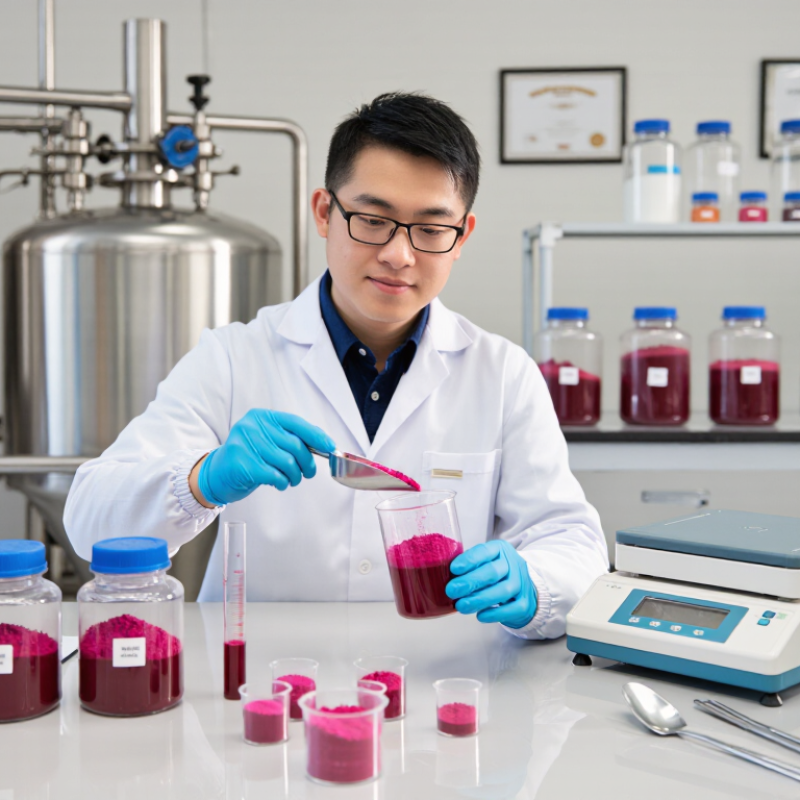
2026 Top Beet Root Juice Powder Suppliers How to Choose?

What Is Beet Root Juice Powder and Why Does Supplier Choice Matter?

Beet root juice powder is a concentrated ingredient made by removing water from beet juice. It usually contains natural pigments, carbohydrates, minerals, and varying nitrate levels. It is not identical to ordinary beet powder, which may come from the whole root. Processing can change flavor, solubility, color strength, and nutrient consistency. That difference matters.

Supplier choice affects more than price. In practical sourcing, buyers should examine raw material origin, production controls, batch testing, and storage conditions. Ask for a clear specification sheet and a recent certificate of analysis. A credible supplier should explain testing methods for moisture, microbial quality, heavy metals, and unwanted residues. Traceable records also help identify problems when a batch smells earthy, clumps, or dissolves slowly. These details reflect professional experience, not just sales language.

Tips: Request a small sample before placing a large order. Compare color, taste, solubility, and test results. Do not rely on bright color alone. Review packaging, lot numbers, shelf life, and transport conditions. One overlooked issue is consistency between batches. Suppliers may meet one specification today and vary slightly later. Small variations can affect beverage texture and formulation. That is worth discussing early.

2026 Top Beet Root Juice Powder Suppliers: How to Choose?

Beet root juice powder is made by removing water from beetroot juice, creating a concentrated powder that can vary in nutrient density, moisture, solubility, and purity. The chart below shows the USDA reference macronutrient composition of raw beetroot per 100 g. Because processing can concentrate or alter these values, buyers should request a current certificate of analysis, ingredient identity testing, contaminant results, and batch consistency data from each supplier.

Reference: USDA FoodData Central, raw beets, 100 g edible portion. Values are shown for raw beetroot and should not be treated as specifications for beet root juice powder.

Which Quality Standards Define a Reliable Beet Root Juice Powder Supplier?

A reliable beet root juice powder supplier should show more than a bright red sample. Ask for documented quality systems, including GMP, HACCP, or ISO 22000 certification. These standards indicate controlled production, hygiene management, and traceable processes. Still, certificates alone do not prove consistent quality.

Request a recent certificate of analysis for every production lot. It should identify nitrate content, moisture, microbiological results, heavy metals, pesticides, and adulteration screening. Independent laboratory testing adds credibility, especially when results include laboratory details and test methods. Check whether the supplier can trace raw roots to farms, harvest dates, and processing records. Clear traceability matters when color, flavor, or nutrient levels change unexpectedly.

Pay attention to handling experience. A dependable supplier should explain drying temperatures, packaging barriers, storage conditions, and shelf-life validation. The powder should arrive dry, free-flowing, and protected from light and moisture. Small sample trials can reveal caking, earthy odor, poor solubility, or fading color. These practical checks often expose issues paperwork misses.

Ask difficult questions. Good suppliers answer directly and admit limitations. I would be cautious about perfect claims, vague test reports, or unusually low prices. One overlooked detail is sampling: a single sample may not represent future batches. Regular testing and written specifications provide stronger evidence of reliability. Supplier performance should be reviewed continuously, not only during the first purchase.

How to Compare Suppliers by Purity, Certifications, and Production Capacity

2026 Top Beet Root Juice Powder Suppliers: How to Choose?

Purity should be checked with recent, batch-specific laboratory reports. Ask for nitrate, moisture, heavy metals, pesticides, microbes, and adulteration results. A supplier’s specification sheet is useful, but it is not independent proof. The 2023 ISO Survey reported more than 1.26 million ISO 9001 certificates worldwide. Certification shows a quality system, not automatic product purity. Confirm the certificate’s scope, expiry date, factory address, and issuing body.

Look for HACCP, ISO 22000, GMP, and relevant organic certification when your market requires them. The FAO and WHO identify microbiological control, traceability, and validated testing as essential food-safety practices. Request a clear chain of custody from beet sourcing to spray drying. Does each batch carry a lot number? Can the supplier provide retention samples? Small details matter. I once treated a clean-looking report as sufficient; that was too optimistic.

Production capacity needs more than an annual tonnage claim. Compare drying equipment, extraction controls, warehouse conditions, backup power, and documented lead times. Ask whether the quoted capacity is theoretical or available during peak harvest periods. Review at least twelve months of delivery records, if possible. A supplier should explain batch variation, especially for nitrate concentration, color, solubility, and flavor. Capacity without consistency creates expensive reformulation work. Pilot samples should be tested under your actual beverage process, not only in the supplier’s laboratory.

2026 Top Beet Root Juice Powder Suppliers How to Choose? - How to Compare Suppliers by Purity, Certifications, and Production Capacity

Use this evidence-based comparison framework to evaluate beet root juice powder suppliers. Specifications may vary by product type, processing method, and intended application; all claims should be confirmed with current batch documents and an independent laboratory when required.

Evaluation Dimension Recommended Benchmark Documents or Data to Request How to Compare Suppliers Suggested Weight
Product Purity and Composition
Botanical Identity Clearly identified as beetroot or beet juice derived from Beta vulgaris. The product description should state whether it is juice powder, whole-root powder, or an extract.
  • Product specification
  • Botanical identification method
  • Raw-material traceability record
Give preference to suppliers that distinguish juice powder from whole-root powder and provide a consistent botanical identity test. 10%
Declared Purity and Carrier Content The label should disclose the actual beet juice solids and any carriers, such as maltodextrin, gum acacia, or other processing aids. A carrier-free product should not be claimed unless confirmed by the specification and test report.
  • Full ingredient statement
  • Carrier percentage or range
  • Moisture and ash results
  • Batch-specific certificate of analysis
Compare suppliers on the amount of genuine beet-derived solids per finished kilogram rather than comparing price per kilogram alone. 15%
Nitrate or Marker-Compound Control If the product is marketed for naturally occurring nitrate, the specification should state a validated nitrate range. If nitrate is not standardized, the supplier should clearly identify it as a non-standardized powder.
  • Marker-compound specification
  • Analytical method, such as ion chromatography
  • Recent batch test results
  • Stability or retest information
Select suppliers that provide consistent batch-to-batch results and explain differences caused by beet variety, harvest season, and processing. 15%
Microbiological Safety Finished powder should meet the microbiological limits specified for the destination market and product category. Testing commonly includes total aerobic count, yeast and mold, coliforms, and relevant pathogens such as Salmonella and Escherichia coli.
  • Batch-specific microbiological COA
  • Testing laboratory details
  • Pathogen control program
  • Environmental monitoring summary
Do not accept a generic “food grade” statement without numerical results, test dates, and identifiable laboratory information. 15%
Contaminant Control The supplier should assess heavy metals, pesticides, mycotoxins where relevant, and other contaminants according to the origin of the raw material and the requirements of the destination market.
  • Heavy-metal test report
  • Pesticide multi-residue report
  • Risk assessment for mycotoxins
  • Allergen and foreign-material controls
Compare both the number of analytes tested and the reporting limits. “Pass” without test values is weaker evidence than a complete analytical report. 10%
Certifications and Regulatory Readiness
Food-Safety Certification A current, independently audited food-safety system is preferred. Common internationally recognized schemes include FSSC 22000, BRCGS, and SQF; HACCP should be part of the documented food-safety system.
  • Current certificate
  • Certification scope
  • Certificate number and validity
  • Latest audit status
Verify that the certificate covers the actual manufacturing site and the relevant processing category, not only a sales or office location. 10%
GMP and Quality-System Controls The facility should operate documented controls for batch records, deviation handling, corrective actions, change control, sanitation, calibration, and product release.
  • GMP certificate or audit report
  • Quality manual summary
  • Deviation and CAPA procedure
  • Product-release procedure
Higher scores should go to suppliers able to demonstrate controlled procedures rather than simply listing “GMP” on a quotation. 10%
Market and Labeling Compliance The supplier should support the requirements of the target market, including ingredient naming, allergen declarations, nutrition information, claims review, and permitted use of the product.
  • Country-specific specification
  • Label-support documents
  • Non-GMO or organic documents when claimed
  • Regulatory statement
Choose a supplier that can provide documents suitable for the intended sales region instead of relying on a one-size-fits-all specification. 5%
Production Capacity and Supply Reliability
Annual Production Capacity Capacity should be stated specifically for beet juice powder or the relevant production line, not only for the supplier’s total powder portfolio. Capacity should be expressed in metric tons per year or per month.
  • Rated and available capacity
  • Current utilization range
  • Number of production lines
  • Planned maintenance schedule
Compare available capacity with your forecast demand and allow room for seasonal fluctuations, maintenance, and unexpected order increases. 5%
Minimum Order Quantity and Lead Time A suitable supplier should provide a written MOQ, standard production lead time, sample lead time, and estimated shipping preparation time.
  • Commercial quotation
  • MOQ by packaging format
  • Normal and expedited lead times
  • Incoterms and delivery location
Compare total delivered cost and delivery reliability rather than unit price only. Short quoted lead times should be supported by stock and production evidence. 5%
Batch Consistency and Retain Samples The supplier should retain representative samples, assign unique batch numbers, and maintain records that link raw materials, processing, testing, and shipment.
  • Batch numbering system
  • Traceability exercise
  • Retain-sample policy
  • Three or more recent COAs for comparison
Request multiple recent COAs and compare moisture, microbiology, color, solubility, and marker values for consistency. 5%
Practical Supplier-Selection Scorecard
Excellent Candidate Strong product identity, transparent carrier disclosure, batch-specific testing, current third-party certification, documented traceability, and capacity that comfortably exceeds projected demand. Complete documentation package supplied before commercial approval; responses are technically consistent across specification, COA, and quotation. Suitable for long-term supply, regulated applications, and customers requiring reliable batch-to-batch specifications. 85–100 points
Qualified Candidate Meets core purity and food-safety requirements but may require additional testing, a pilot order, or clarification of capacity and regulatory documentation. Most documents are available, but one or more items require verification before full approval. Suitable for controlled qualification after sample testing, supplier audit, and review of recent production records. 70–84 points
High-Risk Candidate Uses unclear product terminology, cannot provide batch-specific COAs, has expired or irrelevant certificates, or gives unsupported capacity and purity claims. Documents are generic, incomplete, inconsistent, or unrelated to the actual manufacturing location. Do not approve for commercial use until identity, safety, certification scope, and manufacturing capability are independently verified. Below 70 points

What Should Buyers Check About Pricing, Packaging, and Minimum Order Quantities?

When choosing a beetroot juice powder supplier in 2026, buyers should compare landed cost, not only the quoted price per kilogram. Future Market Insights projects steady growth in the beetroot powder market through 2034, which may increase demand for reliable supply. Ask for a full quotation covering processing, testing, freight, customs, and payment terms. A low offer can become expensive after hidden charges. Request three recent invoices or a price history when possible. That evidence is more useful than sales promises.

Packaging affects freshness, handling, and storage losses. A 25-kilogram kraft bag with a food-grade inner liner may suit bulk production, while a foil pouch can provide stronger protection against moisture and light.

Check seal quality, liner material, lot coding, and pallet conditions. The FAO has reported that roughly one-third of food is lost or wasted globally, so weak packaging deserves serious attention. Still, extra layers are not automatically better. They can raise cost and complicate disposal.

Minimum order quantity is often the quiet risk. A supplier may quote 100 kilograms, then require a full pallet for custom packaging. Ask whether the MOQ applies to stock powder, printed bags, or each flavor and specification.

Confirm shelf life at delivery, retained samples, microbiological limits, and batch consistency. Request certificates of analysis from multiple lots, not one perfect sample.

Buyers sometimes focus too heavily on price. I have found that a slightly higher unit cost can be reasonable when documentation and delivery reliability are stronger. But that judgment should be tested with a small trial order.

How to Select the Best Beet Root Juice Powder Supplier for Your Needs?

Selecting the best beet root juice powder supplier requires more than comparing prices. Start by checking the powder’s source, processing method, and quality documentation. A reliable supplier should provide a current certificate of analysis for every production lot. Review nitrate levels, betacyanin content, moisture, microbiological results, heavy metals, and pesticide testing. Documents matter.

Ask for a small sample before placing a large order. Examine its color, texture, aroma, and solubility in cool water. Good powder usually has a deep red-purple appearance and a mild earthy smell. Excessive clumping may suggest moisture problems. Taste can also reveal unexpected bitterness, although sensory testing should not replace laboratory analysis.

Traceability is equally important. The supplier should identify the growing region, processing date, batch number, and packaging conditions. Sealed, moisture-resistant packaging protects quality during storage and transport. Confirm minimum order quantities, lead times, storage guidance, and support for formulation changes. Clear answers show practical experience.

Price still matters, but it should not dominate the decision. A cheaper powder may have weaker testing or inconsistent color. I have learned that attractive samples do not always represent future batches. Request several lot samples when possible. Check whether specifications remain stable over time. No supplier is perfect. Still, a responsive supplier that admits limitations may be more dependable than one making flawless promises.

Translate »