10 Essential Tips for Choosing the Right Lab Centrifuge
Choosing the right lab centrifuge is crucial for successful experiments. Dr. Emily Carson, a leading expert in laboratory equipment, emphasizes, “The right centrifuge can significantly impact your results.” With the variety of options available, making an informed choice can feel overwhelming.
Consider factors like rotor type, speed, and capacity when selecting a centrifuge. Each laboratory has unique requirements based on the samples they handle. If not carefully matched, the wrong centrifuge can lead to inefficient results.
Detailed specifications play a vital role in decision-making. A centrifuge that spins too fast can damage delicate samples. Conversely, one with insufficient speed may not separate components effectively. Balancing these factors is essential for precise outcomes in any lab setting. Investing time in understanding these elements can prevent regret later on.
Understanding Different Types of Lab Centrifuges: A Comprehensive Overview
When selecting a lab centrifuge, understanding the types available is crucial. Centrifuges are classified based on their design and function.
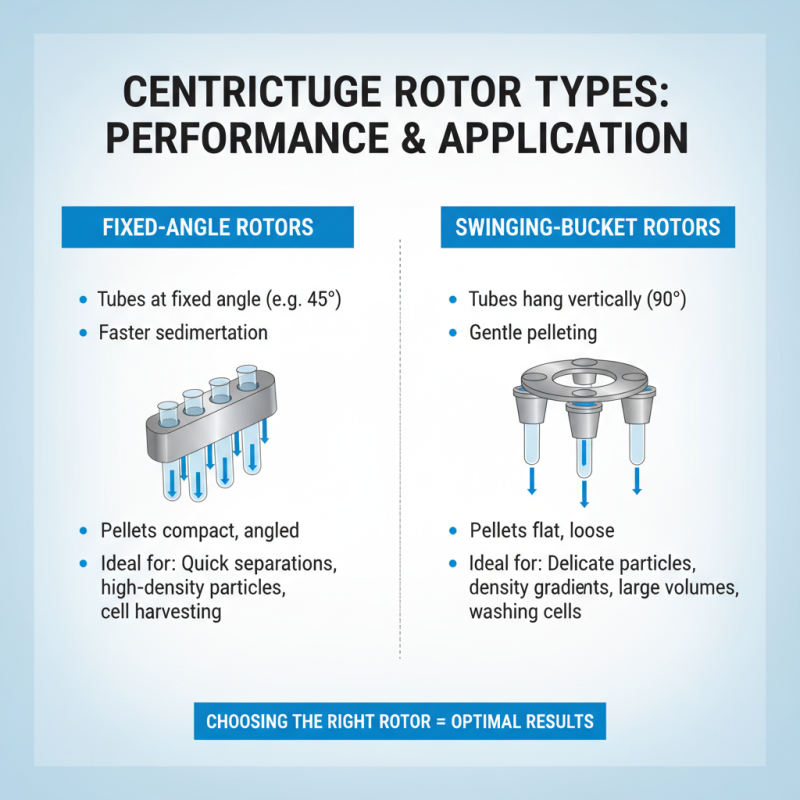
Fixed-angle centrifuges hold tubes at a fixed angle, optimizing sedimentation and concentration of samples. These are ideal for pelleting cells and separating biomolecules.
On the other hand, swing-out centrifuges allow tubes to swing out horizontally during operation. This design is beneficial for separating different densities within samples.
It's vital to consider rotor speed and capacity when choosing a centrifuge. Higher speeds can lead to faster separations, but not all samples require such force.
Some fragile samples might require gentler conditions. Additionally, users must assess the centrifuge's capacity in relation to their workload.
Rushing a decision can lead to complications, such as equipment damage or inadequate separation results.
Seeking professional advice can help avoid these pitfalls and ensure the right choice for your specific applications.
Key Specifications to Consider When Selecting a Laboratory Centrifuge
Choosing the right laboratory centrifuge is crucial for accurate results. Key specifications such as speed, capacity, and rotor type significantly affect performance. Research indicates that centrifuge speed typically ranges from 1,000 to 20,000 RPM. Selecting the appropriate speed can enhance the separation process for various sample types.
Capacity is another vital specification. Many centrifuges hold between 4 to 6 liters. However, a common mistake is choosing a model that does not meet the lab's volume requirements. Understanding your workflow is essential to avoid inefficiencies. It is crucial to strike a balance between speed and capacity based on specific applications, such as clinical testing or research.
Rotor types, including fixed-angle and swinging-bucket rotors, should not be overlooked. Each type has unique advantages that may impact sample integrity. For instance, fixed-angle rotors provide faster separation, while swinging-bucket rotors allow for larger sample volumes. A lab’s specific needs should dictate rotor choice. Many professionals report that misalignment between rotor type and application can lead to suboptimal results.
Laboratory Centrifuge Selection: Key Specifications
The Role of Rotor Types in Centrifuge Performance and Application
Choosing the right rotor type for a lab centrifuge is crucial for achieving optimal results. Rotors come in different shapes and sizes, impacting how samples are processed. Fixed-angle rotors position tubes at a set angle, enhancing sedimentation for quick separations. Conversely, swinging-bucket rotors allow samples to hang vertically, which is essential for pelleting delicate particles.
It's important to consider the application when selecting a rotor. Not every rotor suits every experiment. If sample integrity is vital, a rotor that minimizes shear stress is necessary. Moreover, running samples at inappropriate settings can lead to poor recovery rates and inconsistent results. Experimenting with different rotors may reveal limitations in sample processing, underscoring the need for careful consideration.
Operators should also be aware of rotor materials and their durability. Some compositions resist corrosion better than others, which is an important factor when working with various solutions. Regular maintenance of rotors is key, as wear and tear could affect performance. A well-maintained rotor is not just reliable; it significantly impacts the quality of the results produced.
Evaluating Centrifuge Speed and Force: RPM vs. RCF Explained
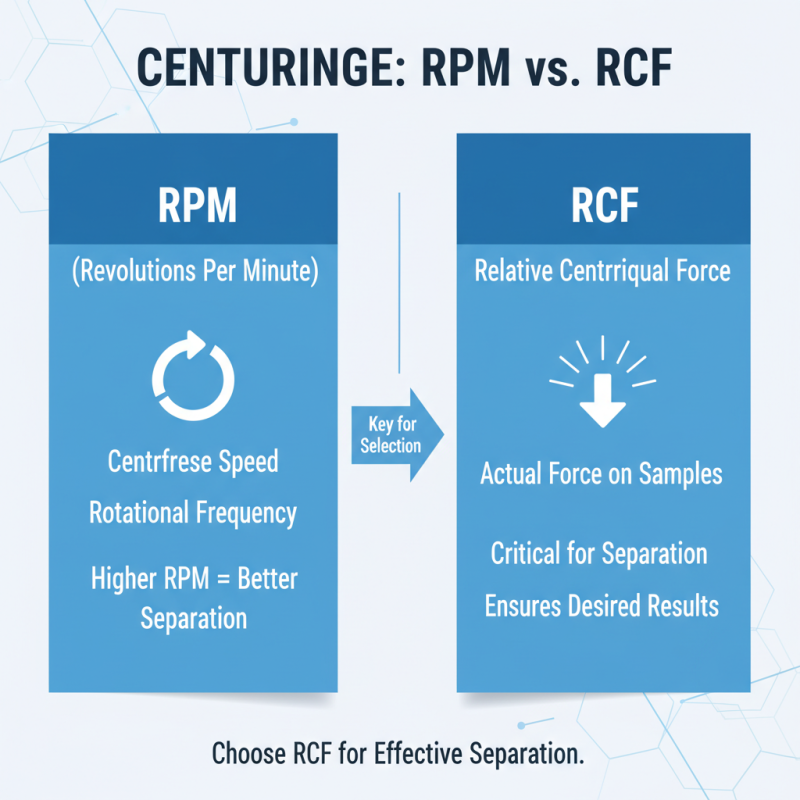
When selecting a centrifuge, understanding the difference between RPM and RCF is crucial. RPM, or revolutions per minute, indicates the speed of the centrifuge. Although higher RPM might seem beneficial, it does not always correlate with effective separation. RCF, or relative centrifugal force, measures the actual force acting on the samples. This force is more critical for achieving desired results.
A centrifuge's RCF is influenced by both the speed and the rotor's radius. For example, a low RPM with a larger rotor may produce higher RCF than a higher RPM with a smaller rotor. This fact often confuses users. It highlights why relying solely on RPM can lead to inadequate sample processing. It's essential to consult user manuals and technical specifications to ensure proper application.
Choosing the right speed requires understanding sample types and desired outcomes. Different samples react uniquely under various forces. Some may break apart at high RCF, while others may not separate well at low speeds. Experimentation may be necessary. Lab practices should prioritize safety and efficiency, sometimes necessitating adjustments based on test results.
Maintenance and Safety Considerations for Optimal Centrifuge Usage
When working with centrifuges, safety cannot be overlooked. Always wear appropriate personal protective equipment. This includes gloves, lab coats, and goggles. Proper attire protects against potential spills or accidents. Ensure that the centrifuge is placed on a vibration-free surface. Unstable setups can lead to malfunction and injuries.
Maintenance is equally important for optimal centrifuge usage. Regularly check the rotor and lid for signs of wear or damage. Replace any compromised parts immediately. Neglecting these checks can cause serious incidents. Balancing your samples is crucial to prevent damage to the centrifuge. Imbalance can lead to excessive vibration, affecting both user safety and equipment lifespan.
Training is essential for all users. Make sure everyone understands the centrifuge's operation and specifications. Misuse often arises from lack of training. Encourage a culture of safety and responsibility within the lab. Discuss past incidents to reinforce the importance of diligence. Continuous education will help maintain safety standards and equipment reliability.