
10 Essential Tips for Choosing Cryogenic Vials for Your Laboratory Needs?
Selecting the right cryogenic vials for your laboratory can be challenging. In the fast-paced world of scientific research, precision is vital. Dr. Emily Carter, a renowned expert in cryogenics, once stated, "Choosing the right cryogenic vials can greatly influence the integrity of your samples." This emphasizes the importance of careful selection.
Cryogenic vials are essential for sample preservation. They withstand extreme temperatures, ensuring that biological materials remain viable. However, many researchers overlook key factors in their selection. The size, material, and sealing methods used for cryogenic vials directly impact their performance. It’s crucial to align these factors with your specific laboratory needs.
In an industry where quality matters, even small oversights can lead to significant issues. For example, using vials that are not designed for cryogenic storage may result in sample degradation. This can be detrimental to research outcomes. Therefore, understanding the unique characteristics of cryogenic vials becomes crucial for achieving reliable results.

Table of Contents
[Hide]
Understanding Cryogenic Vials and Their Importance in Labs
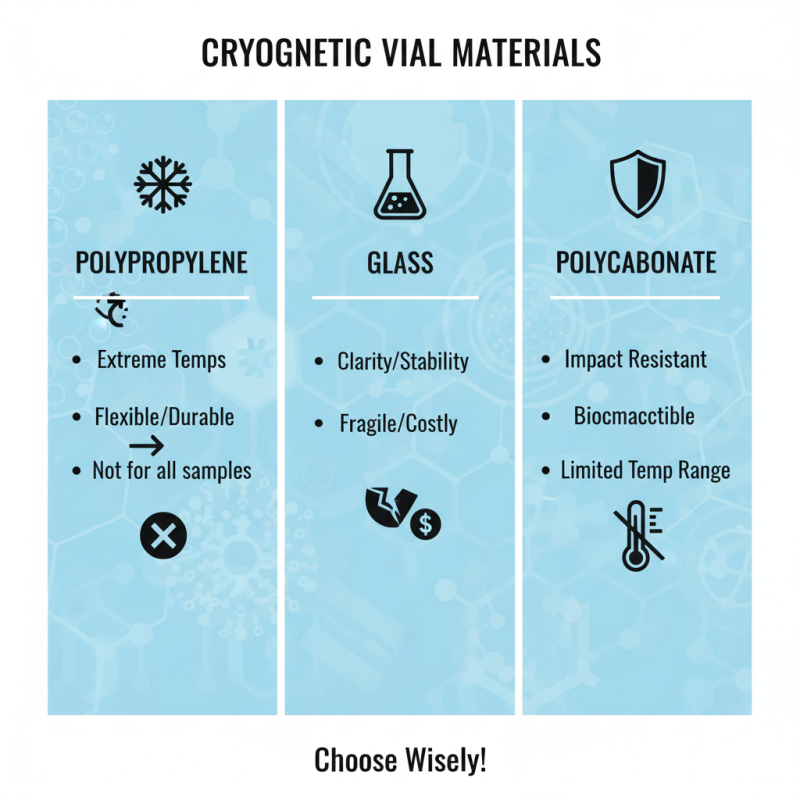
Cryogenic vials play a crucial role in laboratories, especially for storing biological samples. These vials must withstand extremely low temperatures without breaking. Understanding their properties helps ensure the safety of your samples. When selecting vials, consider their material. Some vials are made from glass, while others are plastic. Each has its pros and cons. Glass vials are typically more durable but can be heavier. On the other hand, plastic vials are lighter but may not hold up to extreme conditions as well.
Tip: Look for vials that are specifically labeled for cryogenic use. This ensures they are built to handle the severe temperature fluctuations in a lab environment. Also, check the diameter of the vial. Narrow openings may complicate sample retrieval. A wider mouth often allows for easier access, saving time during experiments.
Storage is another aspect to consider. Each vial should come with a cap that seals tightly. Leaks can be disastrous. Pay attention to the labeling area. This is essential for tracking samples over time. An easy-to-write-on surface can prevent mix-ups, which can lead to costly errors.
Think about where you will store your vials. Freezer space is often limited, which can affect your choice. Organize your vials properly to avoid confusion. Sometimes, it’s easy to overlook these details, but they significantly impact lab efficiency. Choose wisely and be proactive about your vial selections.
10 Essential Tips for Choosing Cryogenic Vials for Your Laboratory Needs
| Tip Number | Tip | Description |
|---|---|---|
| 1 | Material Selection | Choose vials made from materials that can withstand extreme temperatures. |
| 2 | Volume Capacity | Consider the sample volumes you plan to store in the vials. |
| 3 | Closure Type | Select vials with appropriate closure mechanisms to prevent contamination. |
| 4 | Labeling Compatibility | Ensure that vials can be easily labeled for sample identification. |
| 5 | Sterility | Opt for sterile vials for biological sample storage to minimize contamination risks. |
| 6 | Cryogenic Performance | Check for certification that vials perform well at cryogenic temperatures. |
| 7 | Size and Shape | Choose a size and shape that best suits your storage needs and available space. |
| 8 | Budget Consideration | Balance cost with quality; higher price often indicates better performance. |
| 9 | Supplier Reputation | Select vials from reputable suppliers known for quality and reliability. |
| 10 | Storage Systems | Ensure vials fit in your existing storage systems for easy management. |
Related Posts
-

10 Essential Tips for Choosing the Right Cryogenic Vials for Your Research
-
Why Use a Cryo Freezer for Long Term Biological Storage?
-

What is the Importance of Lab Supplies in Scientific Research?
-
2026 Best PCR Tubes for Your Laboratory Needs?
-

How to Choose the Right High Speed Centrifuge for Your Laboratory?
-

Top Liquid Handling Techniques for Efficient Laboratory Work?