What Is the Best Dietary Supplement OEM in China?
Choosing the best Dietary Supplement OEM in China requires more than comparing factory prices. The right partner must combine formulation expertise, stable production, transparent communication, and verifiable quality controls. A polished website is not enough.
In practical supplier evaluations, buyers should inspect GMP systems, ISO certifications, raw material records, laboratory testing, and batch traceability. Ask for recent certificates of analysis, not sample documents from years ago. A reliable manufacturer should explain how ingredients are received, tested, stored, blended, encapsulated, and released. Factory visits can reveal useful details, such as cleanroom behavior, equipment maintenance, and whether production records look complete. Small signs often matter.
Details matter.
The best partner also understands your target market. Label rules, permitted claims, dosage limits, allergen declarations, and packaging requirements may differ across countries. An experienced OEM can support formulation adjustments without making unsupported health promises. It should also provide realistic minimum order quantities, clear lead times, and documented procedures for handling deviations.
However, no supplier is perfect. Certifications can expire, audits can miss problems, and impressive samples may not represent every production batch. That gap matters. Buyers should compare several manufacturers, verify references, test finished products independently, and review contracts carefully. Cost remains important, but the cheapest quote may create delays, reformulation expenses, or quality risks later.
This guide examines how to assess Chinese supplement manufacturers with evidence rather than assumptions. It focuses on technical capability, compliance awareness, communication, customization, and long-term reliability. The goal is not to name one universal winner. The better question is whether an OEM can consistently deliver safe, compliant, and commercially suitable products for your specific market.
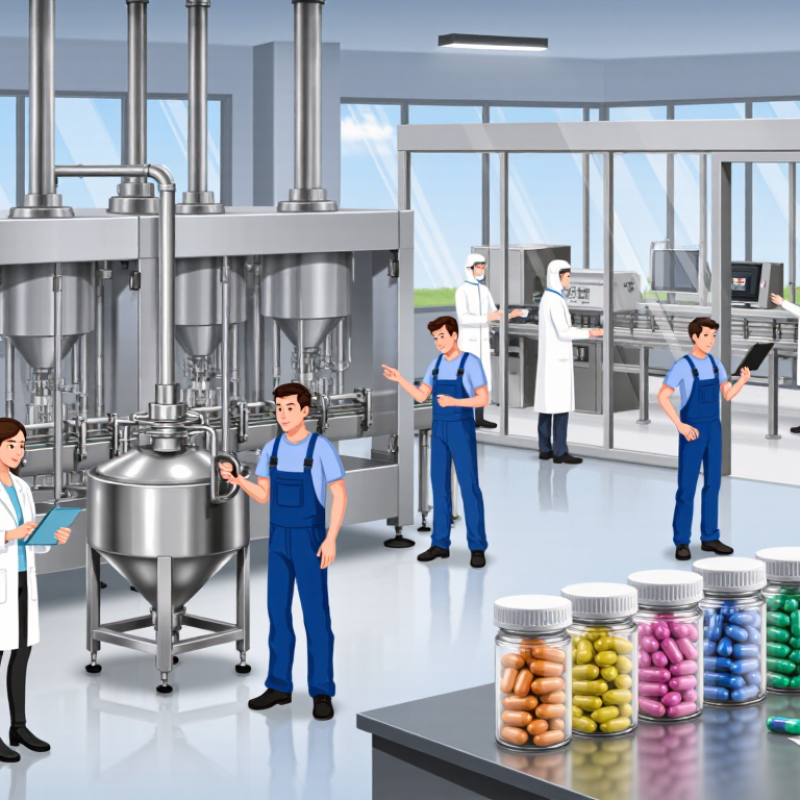
Table of Contents [Hide]
What Is a Dietary Supplement OEM in China?
What Is a Dietary Supplement OEM in China?
A dietary supplement OEM in China manufactures products for another company’s brand. The buyer usually provides a formula, product idea, packaging design, or target market. The manufacturer manages sourcing, blending, filling, labeling, and shipment. For example, a factory may produce capsules in a controlled room, seal them in bottles, and apply customized labels. The final product carries the buyer’s identity, not the factory’s name.
A reliable OEM partner should provide clear ingredient specifications and batch records. It should also support identity testing, microbial analysis, stability checks, and contamination controls. Experienced suppliers can explain production limits instead of promising everything. This matters when a formula includes sensitive ingredients or requires special storage. Certifications can be useful, but they are not enough by themselves. Buyers should review audit reports, testing methods, traceability systems, and sample consistency. A low quotation may look attractive. It may also hide weaker materials, limited testing, or unclear service terms. I have found that small communication gaps often become larger quality problems later.
Tips: Request a pilot batch before placing a large order. Compare the delivered sample with its specification sheet. Ask who approves raw materials and how rejected batches are handled. Check whether labels meet the rules of your target market. Keep written records of formula changes, test results, and packaging approvals. Mistakes still happen, even with careful suppliers. Clear documentation makes them easier to detect and correct.
What Is the Best Dietary Supplement OEM in China? — What Is a Dietary Supplement OEM in China?
| Evaluation Dimension | What It Means | What to Verify | Why It Matters |
|---|---|---|---|
| OEM Scope | An OEM manufacturer produces supplements to a buyer’s specifications, which may include a supplied formula, dosage form, packaging, and label requirements. | Confirm which services are performed in-house and which are handled by subcontractors. | Clarifies responsibilities for production, quality control, and project coordination. |
| OEM vs. ODM | An ODM supplier may offer product concepts or existing formulations for adaptation; an OEM project is generally based on the buyer’s specified product requirements. | Ask who owns the formula, what can be customized, and whether development or licensing terms apply. | Helps establish product control and intellectual-property expectations. |
| Quality Management | Documented procedures for receiving materials, production, testing, recordkeeping, and handling deviations. | Review the quality-management system, audit records, batch documentation, and corrective-action process. | A certificate alone does not show how a particular product batch is controlled. |
| Facility Certifications | Facilities may hold food-safety or quality certifications, depending on their operations and target markets. | Check the certificate’s scope, issuing body, validity dates, and whether it covers the production site and product category. | Certification requirements differ by market and do not replace product-specific compliance checks. |
| Raw-Material Control | Supplier approval, ingredient identification, incoming inspection, and traceability records for raw materials. | Request specifications, certificates of analysis where applicable, and a description of supplier-qualification procedures. | Supports ingredient identity, consistency, and investigation of quality issues. |
| Product Testing | Testing may cover identity, strength, microbiological quality, contaminants, or other product-specific characteristics. | Agree on test methods, acceptance criteria, laboratory responsibilities, and which results will appear in batch records. | The appropriate testing plan depends on the formula, ingredients, destination market, and applicable rules. |
| Dosage-Form Capability | Capabilities can include capsules, tablets, powders, liquids, softgels, or gummies, but not every facility makes every format. | Verify that the specific site has suitable equipment and experience with the requested format and ingredients. | Equipment and formulation requirements can affect feasibility, stability, and production planning. |
| Regulatory and Label Support | A supplier may provide documents or technical input, but market-specific responsibility for product and label compliance should be clearly assigned. | Identify who checks ingredient permissions, claims, mandatory label content, and import documentation for each destination market. | Requirements vary by jurisdiction, and a supplier’s general guidance is not a substitute for regulatory review. |
| Minimum Order and Lead Time | Minimum order quantities and production timelines vary by formulation, dosage form, packaging, testing, and order schedule. | Request a written quotation that separates sampling, material procurement, production, testing, and shipping timelines. | There is no reliable universal MOQ or lead time for all supplement OEM projects. |
| Batch Traceability and Recall Readiness | The ability to link finished-product batches to production records and relevant material lots, and to follow a documented complaint or recall process. | Ask how batch records are maintained, how complaints are investigated, and how the facility conducts traceability exercises. | Supports timely investigation and response if a quality or safety issue arises. |
| How to Identify the Best Fit | The best supplier is the one that can document a suitable match for the product, market, quality requirements, and commercial plan. | Compare site-specific evidence, product experience, transparent costs, communication, and clearly defined responsibilities. | A general ranking is less useful than checking the supplier against the needs of a particular project. |
Note: Capabilities, certifications, order quantities, timelines, and regulatory responsibilities vary by facility, product, and destination market. Verify current documentation directly before making a sourcing decision.